|
|
|
|
|
|
|
|
|
|
|
|
|
|
American Heart Month
Taylor Lynn, Extension Agent, FCS
February is American Heart Month, a time to focus on realistic ways to care for our hearts. Conversations about heart-healthy habits can sometimes feel overwhelming, but supporting heart health doesn’t have to mean a complete lifestyle overhaul. For many of us, it begins with small, everyday choices that fit naturally into our routines.
In the kitchen, heart-healthy eating can start with simple substitutions and mindful habits. Using olive oil instead of butter or shortening, enjoying foods rich in healthy fats like nuts, seeds, and fish, and cutting back on highly processed foods can all support cardiovascular health. Paying attention to sodium intake is another small step that can make a big difference through actions like tasting food before adding salt, choosing lower-sodium options, and using herbs and spices to add flavor.
Research also shows that heart health is influenced by more than just what we eat. How we manage stress, how well we sleep, and whether we build time into our day to slow down all play an important role. Chronic stress and poor sleep can increase strain on the heart. Choosing positive stress management techniques, such as taking a short walk, connecting with loved ones, practicing mindfulness, or simply pausing to breathe, can support both heart health and overall well-being.
With heart disease remaining the number one cause of death in the United States, American Heart Month is an opportunity to reflect and take action. Even small changes can have a lasting impact when practiced consistently. For heart-healthy inspirations in the kitchen, visit medinsteadofmeds.com to explore recipes designed to support heart health without sacrificing taste.
|
|
|
|
|
|
|
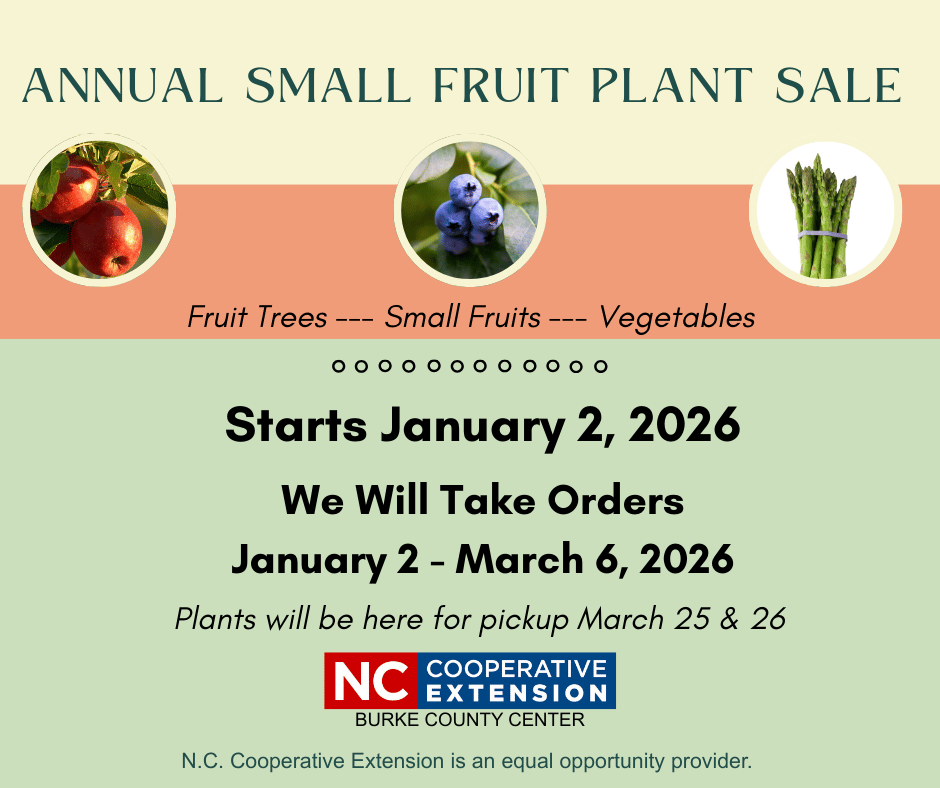
Our Small Fruit Plant Sale Starts January 2, 2026
|
|
|
|
|
|
|
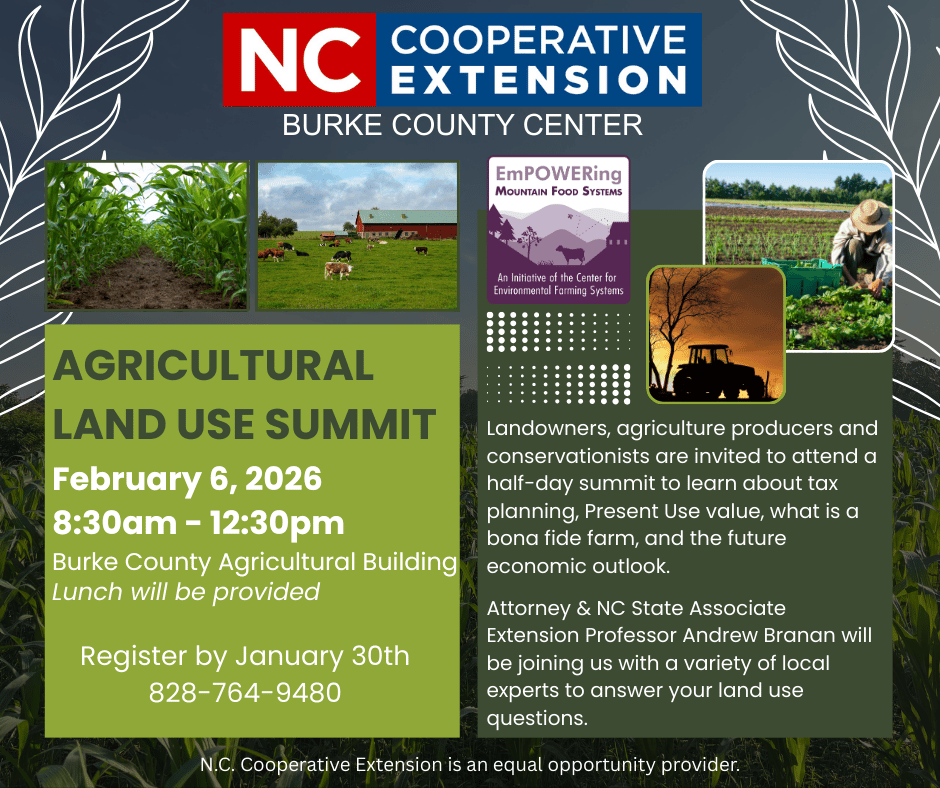
Acricultural Land Use Summit
February 6, 2026
8:30am - 12:00pm
Burke County Agricultural
Call our office at 828-764-9480 to register
|
|
|
|
|
|
The Power of Potential
Nicki Carpenter, Extension Agent, 4-H Youth Development
What is 4-H? It’s more than a club—it’s a community of more than 100 public universities across the nation, delivered by Cooperative Extension, providing experiences where young people learn by doing. For more than 100 years, we havewelcomed youth of all beliefs and backgrounds.
We give kids a voice to express who they are and how they make their lives and communities better. Through life-changing programs, nearly six million kids and teens are learning the skills and abilities to be resilient, adaptable, and ready for work and life.
At 4-H, we believe in the potential of all young people. We believe in developingyouth who are empowered, confident, hard-working, and compassionate. We want our youth to see a world beyond themselves, gaining the life-long skills to succeed in both college and career. We believe every child is valuable and deserves the support and freedom to choose their own path.
By leveraging the power of America’s leading public universities, we practice positive youth development by creating positive learning experiences. We’re not just teaching skills; we’re building determined and responsible leaders.
Join us in empowering the next generation. Believe in the power of young people.
To find a 4-program near you, visit 4-H.org, or you can call our office at 828-764-9480.
|
|
|
|
|
|
|
|
We are looking for a new Consumer Horticulture Extension Agent to serve the citizens of Burke County.
The agent in this position will provide leadership for the consumer horticulture programs at the Burke County Center. In addition, there may be some commercial horticulture programs that the agent would assist with the area agent . This position also provides training and support for the Extension Master Gardener program in Burke County. The agent will provide relevant educational programming and training, as well as proactively conduct needs assessments and program evaluations for the county.
North Carolina Cooperative Extension gives our residents easy access to the resources and expertise of NC State University and NC A&T State University through educational programs, publications, and events. Cooperative Extension agents deliver unbiased, research-based information to North Carolina citizens.
The agent in this position will have educational responsibilities in all phases of consumer and commercial horticulture (including but not limited to): insect and disease diagnosis, turf, ornamental, and nursery operation support, fruits and vegetable production, sustainable agriculture, specialty crops, beekeeping, organics, community-supported agriculture, local farmer’s markets, and some pesticide education.
Read the complete job description and apply at
jobs.ncsu.edu/postings/226422
|
|
|
|
|
Winter Feeding the Beef Herd
Damon Pollard, Extension Agent, Livestock
Winter feed costs are a cow-calf operation’s largest expense. Determining the most viable program for a particular operation depends on the animal type, stage of pregnancy, body condition, available feed resources, quality of fed forage and feed cost. Dry or mature cows, for instance, require lower-quality feed than nursing cows or young females.
Generally, winter feeding consists of harvested hay and silage. Onecan estimate winter feed requirements based on dry matter (DM)intake/head/day. A 1,350-lb. pregnant beef cow typically requires 25-30 lbs. DM/day, or about one 1,000-lb. bale/head/month.
A practical rule of thumb is to increase energy intake by 1% for every degree of coldness below the lower critical temperature (20°F) of a cow. Regardless if you feed stored forages or graze residues, the cow’s diet must be sufficient through the winter months to uphold a body condition score (BCS) of 5 to 6 (9-point scale; 1 = emaciated and 9 = obese). Research shows a cow BCS of 5-6 is optimum for maintaining body weight andsupporting lactation and fetal growth.
Supplementation may be needed when nutrient demands aren’t met by the basic winter diet. Late gestating beef cows have minimum nutrient requirements of 55% total digestible nutrients (TDN) and 8% crude protein (CP). But lactating fall-calving cows or spring calving first- and second-calf heifers have minimum winter requirements of 62% TDN and 11% CP to maintain a 5 to 6 BCS. Those requirements will increase (TDN = 66-70%; CP = 11-13%) for fall-calving, first- and second-calf heifers during the winter months.
If a TDN or protein supplement is needed, compare the nutrient intake of the diet with the cow’s nutrient requirements (based on animal type and pregnancy status) and determine what additional nutrient(s) are needed. Throughout the winter, evaluate cow performance (body weight and condition changes) as a result of your winter-feeding program, especially if additional nutrient supplementation was needed. This will tell you if you’recorrectly supplementing your cattle through the winter and maintaining body condition.
|
|
|
|
|
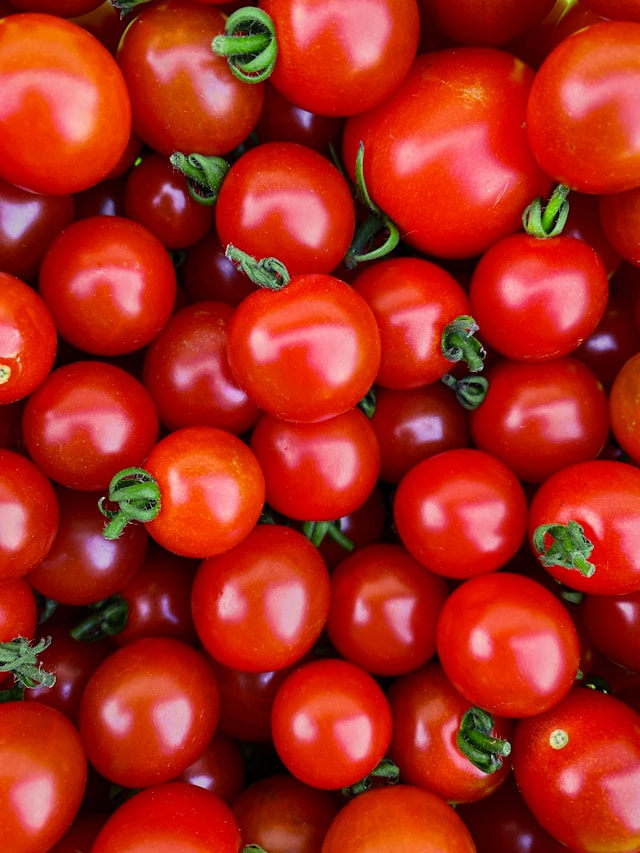
Registration is Open!
N.C. Tomato Growers Association’s
58th Annual Meeting and Winter Vegetable Conference and Trade Show
Wednesday, February 25, 2026 and Thursday, February 26, 2026
|
|
|
|
|
|
|
Burke County Beekeepers Association
Beekeepers Monthly Meeting
February 10, 2026
7:00 pm
Burke County Agricultural Building
|
|
|
|
|
4-H Update
Nicki Carpenter, Extension Agent, 4-H Youth Development
February 7, 2026
West District Horse Bowl
- 4-H Summer Camp dates and registration info will be coming out soon.
|
|
|
|
|
|
|
|
|
|
NC State University and N.C. A&T State University works in tandem, along with federal, state and local governments, to form a strategic partnership called N.C. Cooperative Extension.
|
|
|
|
N.C. Cooperative Extension is an equal opportunity provider.
|
|
|
|
|
|
|
|
|
|
|
|
|