|
Our website has Frequently Asked Questions that you may find useful.
Feel free to contact April Bowman, Stokes County Livestock Extension Agent at awbowman@ncsu.edu or 336-593-8179 if you need assistance.
Our office Is NOT always staffed. Please call before coming if you plan to visit. |
|
|
|
|
|
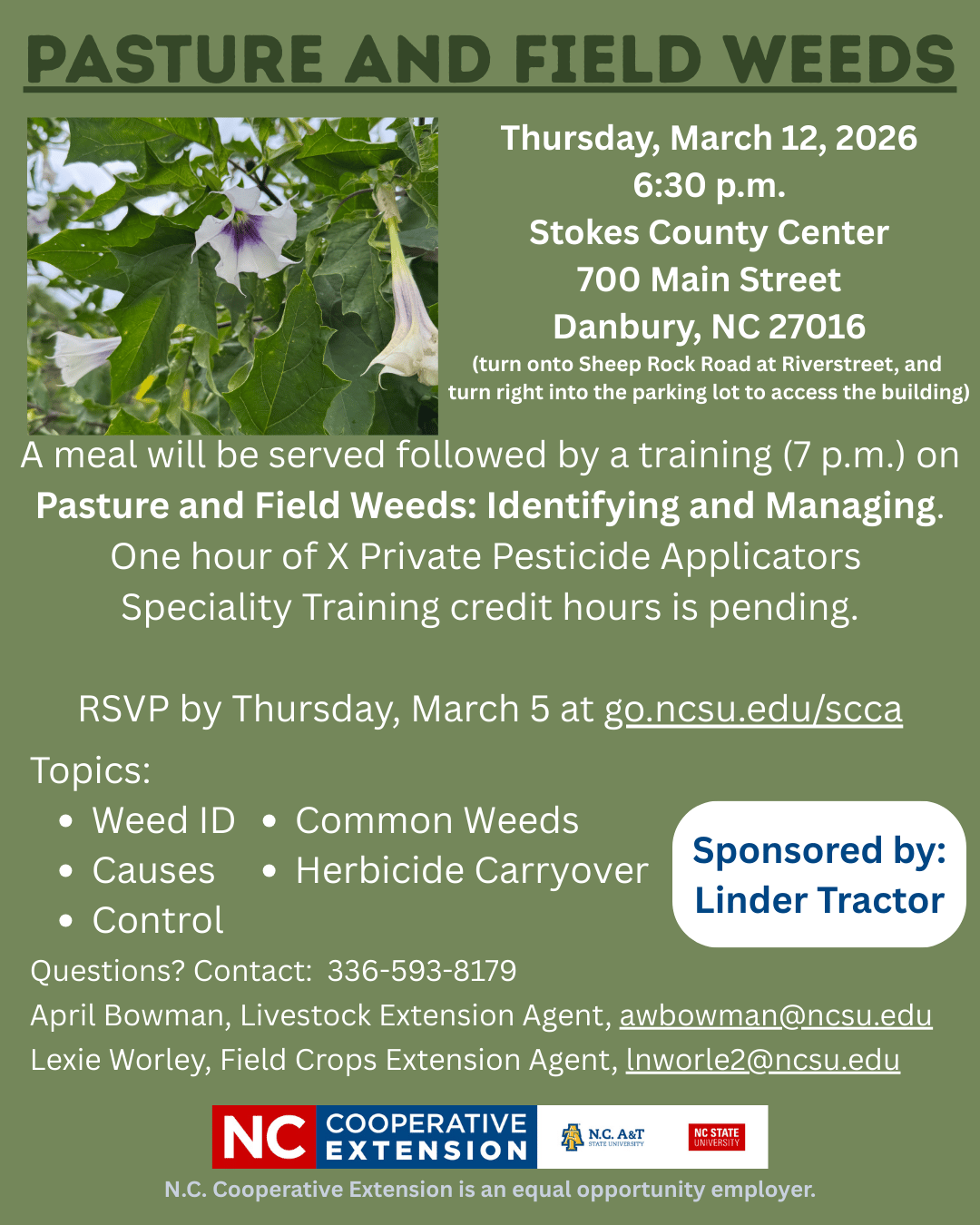
Pasture and Field Weeds
Please RSVP TODAY for Pasture and Field Weeds at https://go.ncsu.edu/scca.
Join N.C. Cooperative Extension for a meal courtesy of Linder Tractor, followed by a training on Pasture and Field Weeds: Identifying and Managing. One hour of X, Private Pesticide Applicators Speciality Training credit hours will be given for N, O, D, and X. |
 |
|
|
|
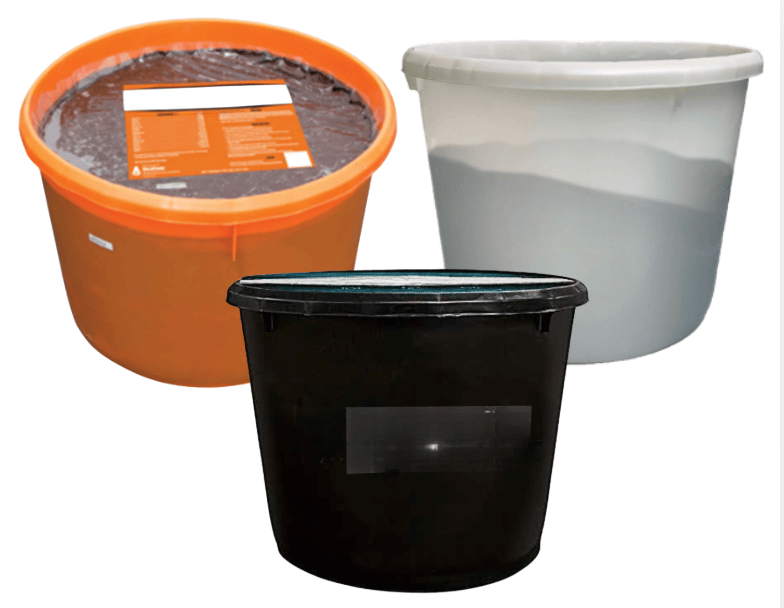
Empty Mineral Tubs Needed
South (Sawyer Ferguson) and North (Rachel Macie) Stokes High Schools would like empty mineral tubs to use as planters (so cracks are fine). (West has plenty.) If you have any, you can deliver them to the schools, or to the Extension Center. |
 |
|
|
|
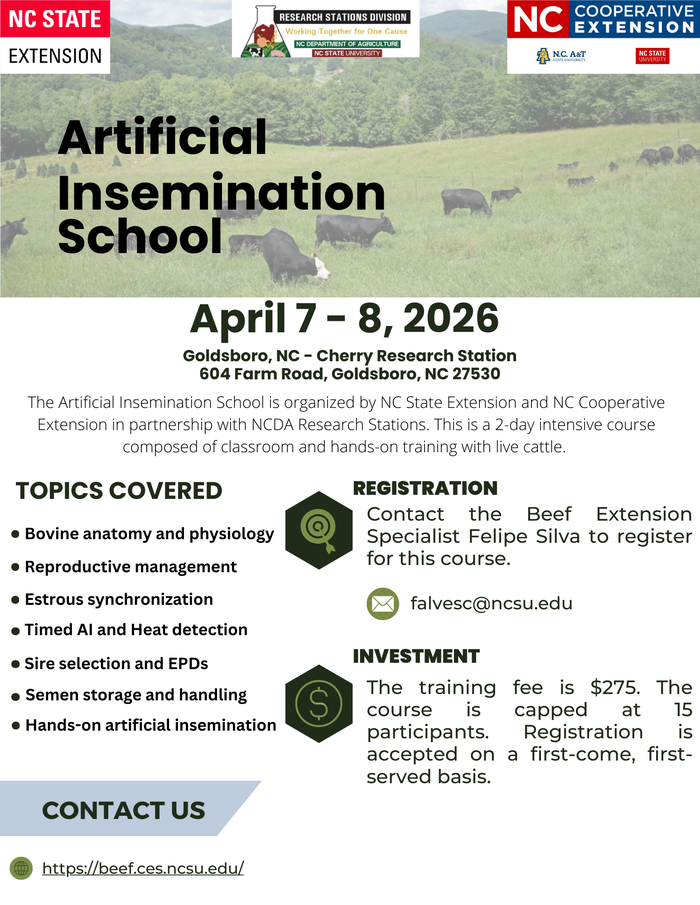
Cattle Artificial Insemination Workshop
Register today for our 2026 Spring Artificial Insemination that will take place at the NCDA&CS Cherry Research Station (604 Farm Rd, Goldsboro, NC 27530).
For more information and registration contact;
Felipe Silva
Assistant Professor and Beef Extension Specialist
falvesc@ncsu.edu
Note: We will hold a reproduction school in Reidsville in May that will not include hands-on insemination or semen storage. |
 |
|
|
|
|
|
Shearing Tips
Hae you aren't able to shear your flock yourself, have you lined up someone to do it for you? Our Frequently Asked Questions page has a link to shearers: https://stokes.ces.ncsu.edu/stokes-county-livestock-forage/frequently-asked-livestock-questions/.
If you are paying someone to shear for you, remember that their job is to shear and time is money. It's your job to catch the animals, and bring them to the shearer, as well as to pen them afterwards. Typically, you keep the wool, so it's also your job to bag it. Animals MUST be dry for shearing!
If you plan to sell your wool, try to avoid contamination from livestock paint, feed, grass seed heads, twine, etc. Learn more here. |
|
|
|
Managing New Stands of Tall Fescue
If you have planted tall fescue in the past two year, it's important that you don't overgraze, and scout for weeds. If you have significant weed pressure and we have had three days above sixty and are expected to have sixty degree weather the next three, it's a good time to spray a herbicide. In addition, wait until the new Fescue has at least four leaves on it. Read the herbicide label to ensure that it's safe to use on newly established fescue. Feel free to reach out to me if you aren't sure if the herbicide you want to use is effective agains the weeds that you're seeing. Learn more from Dr. Matt Poore's Timely Tips. |
|
|
|
March Tips
-
Watch for pastures and hayfields for emerging weeds and thistles, so you can treat early.
-
Pay close attention to hay feeding areas to see If you brought any new weed species in with your hay.
-
If you haven't scheduled/ordered your fertilizer, do it now. Many places are already backed up.
-
Have you scheduled/ordered your fertilizer?
-
Have you done a soil sample to know what nutrients you need to put out? Soil testing is free now through Thanksgiving. The boxes may be picked up from our office M-F, 8:30 - 5, or from LTD, or DNE Supply in King.
-
Hay fields will need a minimum of 15 pounds of Phosphate, and 40 pounds of Potash for every tone of hay removed from the field, in addition to 50-60 units of Nitrogen.
-
Our livestock scales can be used to weigh bales of hay if you don't know what yours weigh.
-
We also have a hay probe that you can borrow to analyze your hay's nutrient value.
Visit https://stokes.ces.ncsu.edu/rental-equipment/ to learn more about our rental equipment. |
|
|
|
REMINDERS |
|
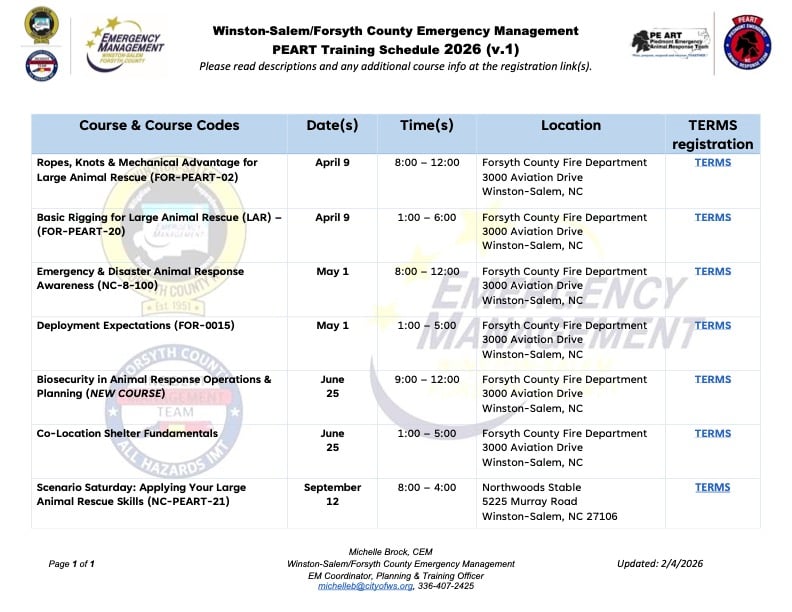
Emergency Animal Response Training
I hope everyone is surviving this icy, snowy, cold weather. The chances are good that if you have social media or have watched the news, you have seen rescue crews pulling an animal out of a lake or pond. The animals walk out on ice and then break through and have to be rescued from the water using rigging, knots, and mechanical advantage with pulley and levers. Others have simply gotten next to a hay feeder or wall to get out of the wind and haven't been able to get their feet back under them to get back up. Maybe you yourself have had an animal get stuck in a hay feeder, stick their head inside a knot of a tree, or get their feet under them on the uphill side. I want to encourage you all to take both Basic Rigging for Large Animal Rescue, and/or Ropes, Knots, and Mechanical Advantage for Large Animal Rescue through the Piedmont Emergency Animal Response Team or PE-ART. You do NOT have to be an emergency responder!
-
Ropes, Knots and Mechanical Advantage - April 9 - 8-12 - Forsyth Fire Dept
-
Basic Rigging - April 9 - 1-6 PM - Forsyth Fire Dept
-
Emergency & Disaster Animal Response Awareness - May 1 - 8-12 - Forsyth Fire
-
Biosecurity in Animal Response Operations and Planning - June 25 - 9-12 - Forsyth Fire
Registration for all courses is through NC TERMS. |
 |
|
|
|
Stokes County Cattlemen's Association Membership
Have you paid your 2026 Stokes County Cattlemen's Association dues and updated your membership information? Visit https://stokes.ces.ncsu.edu/stokes-county-livestock-forage/beef-cattle-resources/scca/ |
|
|
|
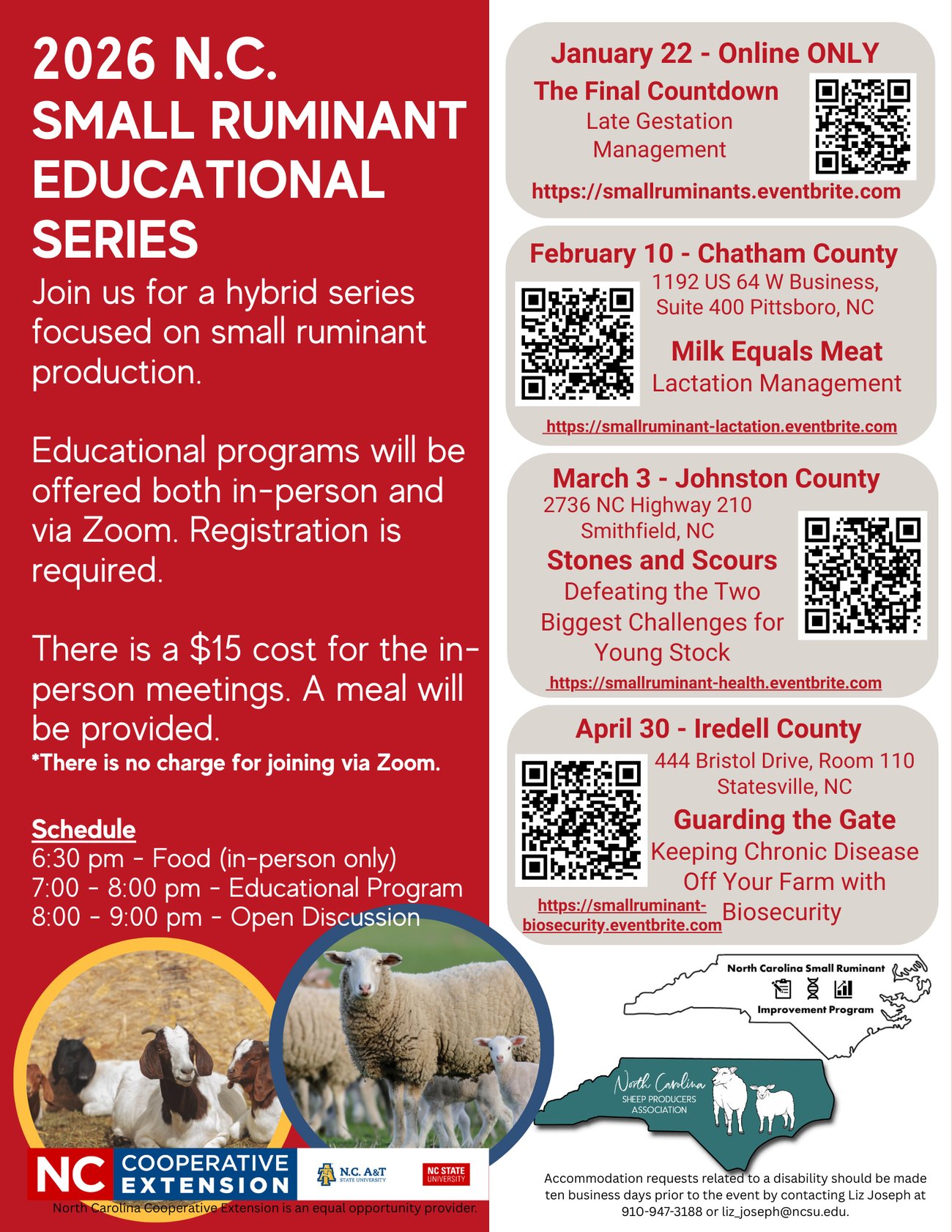
Small Ruminant Workshops
The N.C. Small Ruminant Educational Series is an annual program designed to provide practical, research-based information to help sheep and goat producers improve animal health, productivity, and on-farm management. Each year, this series focuses on timely topics and common challenges faced by small ruminant producers across North Carolina.
Quick Registration Links
Long-term impacts on productivity and herd health
Food & networking begin at 6:30 p.m. Zoom program starts at 7:00 p.m.
Eventbrite: https://smallruminant-lactation.eventbrite.com
https://chatham.ces.ncsu.edu/2026/01/nc-smallruminant-series/
You can access the first three workshops:
|
 |
|
|
|
Save the Dates (more information and registration coming soon)
- Wolfpack Roundup Sale and Educational Program (Spring Sheep Sale) - April 18, 2026 in Raleigh, NC and online at https://plauctions.live/home
|
|
|
|
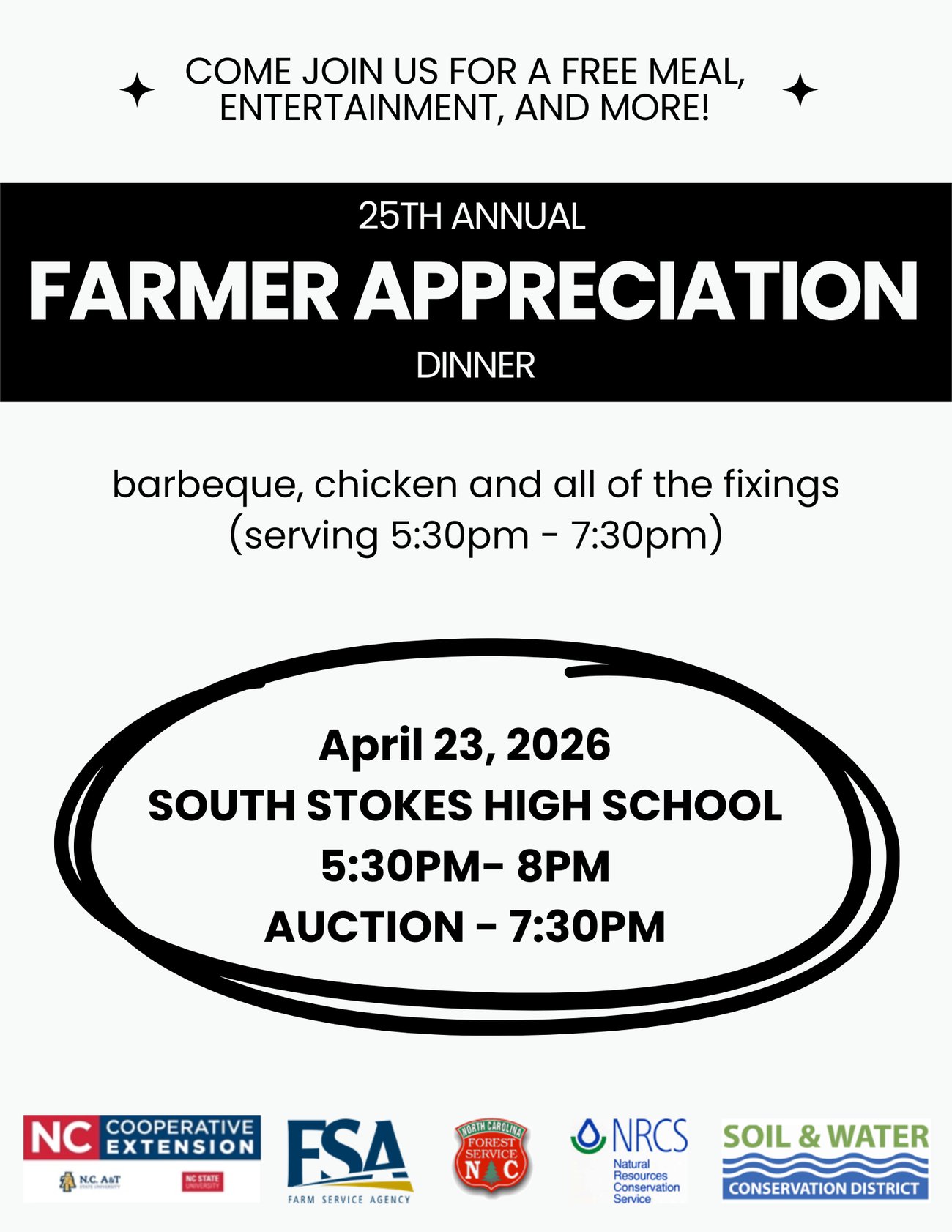
Save the Date for Farmer Appreciation Day, April 23 at South Stokes High School |
 |
|
|
|
Cattle Handling System
The cattle chute and attached palpation cage are on a wheel kit and all can be rented from the county for a fee. Visit https://stokes.ces.ncsu.edu/rental-equipment/ to learn more. |
|
|
|
|
|
|
|
|
 |
|
|
|
**Disclaimer: The use of brand names and/or any mention or listing of specific commercial products or services herein is solely for educational purposes and does not imply endorsement by NC State University or our partners, nor discrimination against similar brands, products or services not mentioned.
Individuals who use chemicals are responsible for ensuring that the intended use complies with current regulations and conforms to the product label.
N.C. Cooperative Extension promotes equal opportunity and prohibits discrimination and harassment based upon one’s race; color; religion (including belief and non-belief); sex, including but not limited to pregnancy, childbirth or other related medical condition, parenting and sexual harassment; sexual orientation; actual or perceived gender identity; age; national origin; disability; veteran status; genetic information; or reprisal or retaliation for prior civil rights activity.
In compliance with the Americans with Disabilities Act, NC State University will honor requests for reasonable accommodations made by individuals with disabilities. Please direct accommodation requests to: Matt Lenhardt, matt_lenhardt@ncsu.edu or 336-593-8179. Requests can be served more effectively if notice is provided at least {10} days before the event.”
Click here to unsubscribe
NOTE: This link will unsubscribe you from ALL emails from N.C. Cooperative Extension, Stokes County Center. To unsubscribe from one email list (ie, livestock) contact April Bowman, at awbowman@ncsu.edu, or 336-593-8179. |
|
|
|
|


