|
|
|
|
|
Livestock Forage Program
Stokes County livestock producers may qualify for USDA Livestock Forage Disaster Program (LFP) due to the severe drought conditions we are experiencing. Financial assistance is available to help offset grazing losses and supplemental feed costs. You must APPLY for those benefits through the Farm Service Agency (FSA) in the old courthouse at 501 Main Street, Danbury; they aren't automatic. To be eligible, producers must have owned commercial beef cattle, dairy cattle, sheep, goats, equine, and other qualifying species at least 60 days prior to the official drought designation on owned, or leased pastureland; calving records or other documentation is required. Appointments are recommended. 336-593-8128, extension 2. |
|
|
|
Livestock Culling and Drought Management
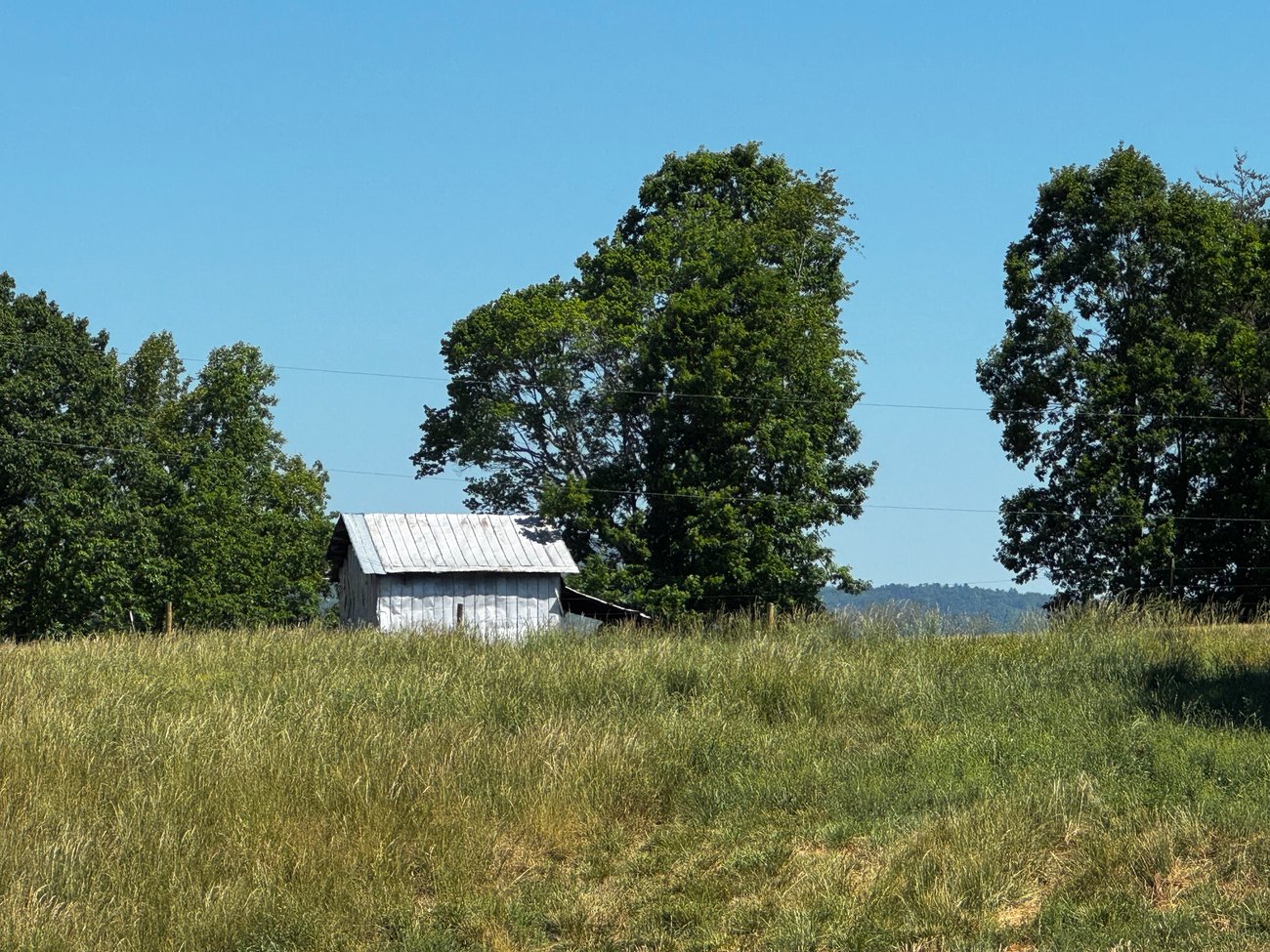
Most of us are overstocked for the early drought conditions that we have been experiencing. In addition, hay supplies are limited. Unfortunately, you should probably cull some livestock sooner rather than later. Learn more about ranking your stock to decide who to cull and who to keep on our website.
In addition, you may come out ahead to allow your pastures to rest, while putting your stock in a sacrifice area and feeding hay (if you can find it), rather than damaging the root system of your plants, stressing those plants, compacting your soil, and putting your animals at increased risk for internal parasites. |
 |
|
|
|
Livestock Rescue Training
-
June 25 - Biosecurity in Animal Response - 9 AM-Noon, Forsyth Fire Department; biosecurity as it applies to farms and farm animals, emergency disaster sheltering (companion animals), and first responder called to emergency incidents involving animals. Topics will include an overview of biosecurity and principles, biosecurity best practices on farms (livestock and poultry) and companion animal shelters, and biosecurity and PPE recommendations for first responders. Intended audience: anyone who owns or works with domestic animals and emergency responders.
-
June 25 - Co-Location Shelter Fundamentals - 1-5 PM, Forsyth Fire Department; This course will train volunteers and emergency response personnel on the legal responsibilities for companion animal sheltering during emergencies, essential skills needed to set up an emergency animal shelter and how to utilize the Companion Animal Mobile Equipment Trailer (CAMET) and Companion Animal Shelter Trailer (CAST). Training will be divided into a a lecture format and a hands-on exercise.
-
September 12 - Scenario Saturday: Applying Your Large Animal Rescue Skills, Northwoods Stable, Winston-Salem; This course focuses on applying large animal rescue techniques and skills. LAR scenarios may include, but are not limited to the following: ropes, knots and mechanical advantage concepts; lifting; dragging; extracting from enclosed areas; and applying LAR equipment & tools.
|
|
|
Strengthening Your Risk Management: Farm Insurance Coverage
As we move into a busier season, it is a prudent time to evaluate your operation's insurance strategy. A common and potentially costly oversight is assuming that a standard homeowners policy provides sufficient protection for agricultural activities. In most cases, it does not.
To ensure your livelihood is adequately protected, consider the following key areas of your risk management plan:
1. Liability and Operational Risks
Farm liability often requires specialized coverage beyond basic property insurance. Are you protected against the financial impact of:
-
Livestock Liability: Accidents resulting from livestock escaping enclosures.
-
Transit and Machinery: Collisions or incidents involving tractors and equipment on public roadways.
-
Environmental Risks: Incidents of chemical or spray drift.
-
General Perils: Theft, vandalism, fire, or weather-related damage (such as hail).
2. Equipment vs. Liability
It is important to distinguish between property coverage (which protects the physical asset) and liability coverage (which protects you in the event of a lawsuit). These may be structured as separate policies or endorsements; verify that both your machinery and your actions are covered.
3. Valuation: Actual Cash Value vs. Replacement Cost
Review how your structures are insured. If a critical building—one essential to your daily operations—were lost, would an Actual Cash Value (ACV) settlement provide enough capital to rebuild?
-
Actual Cash Value: Covers the value of the building minus depreciation.
-
Replacement Cost: Covers the actual expense of constructing a new, similar building at current market rates.
Pro Tip: If you cannot maintain business continuity without a specific structure, transitioning that building to a Replacement Cost policy is often a vital investment.
We encourage you to schedule a review with your insurance agent to identify any gaps in your current coverage and ensure your farm remains resilient in the face of the unexpected.
Learn more in this video from the NC FarmLaw program. |
|
|
|
Quality Assurance Injection Tips/Protocols
-
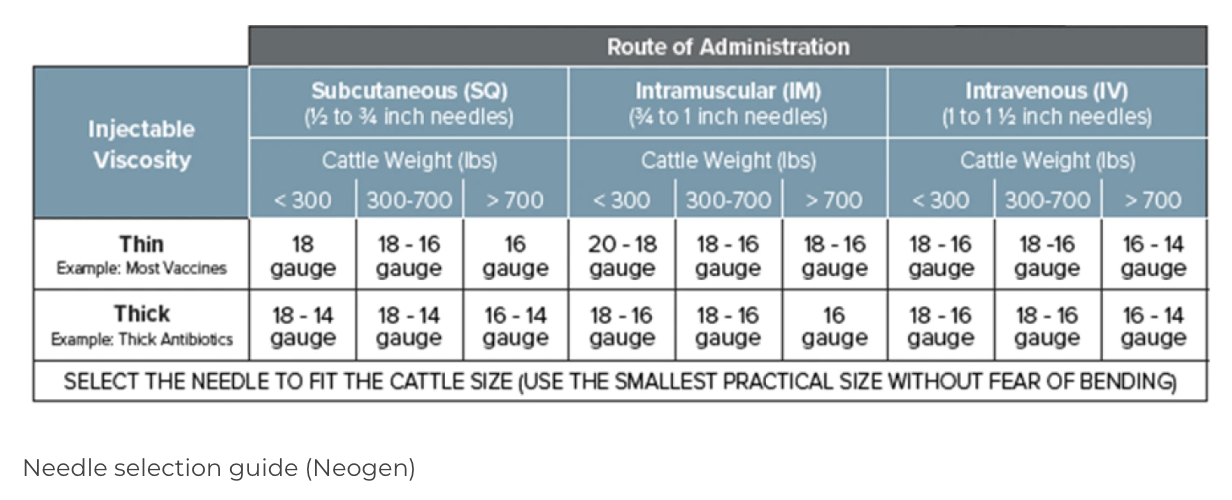
It is important to follow Quality Assurance principles and label directions when giving medications to livestock, but injections are even more critical to avoid damaging a meat product.
-
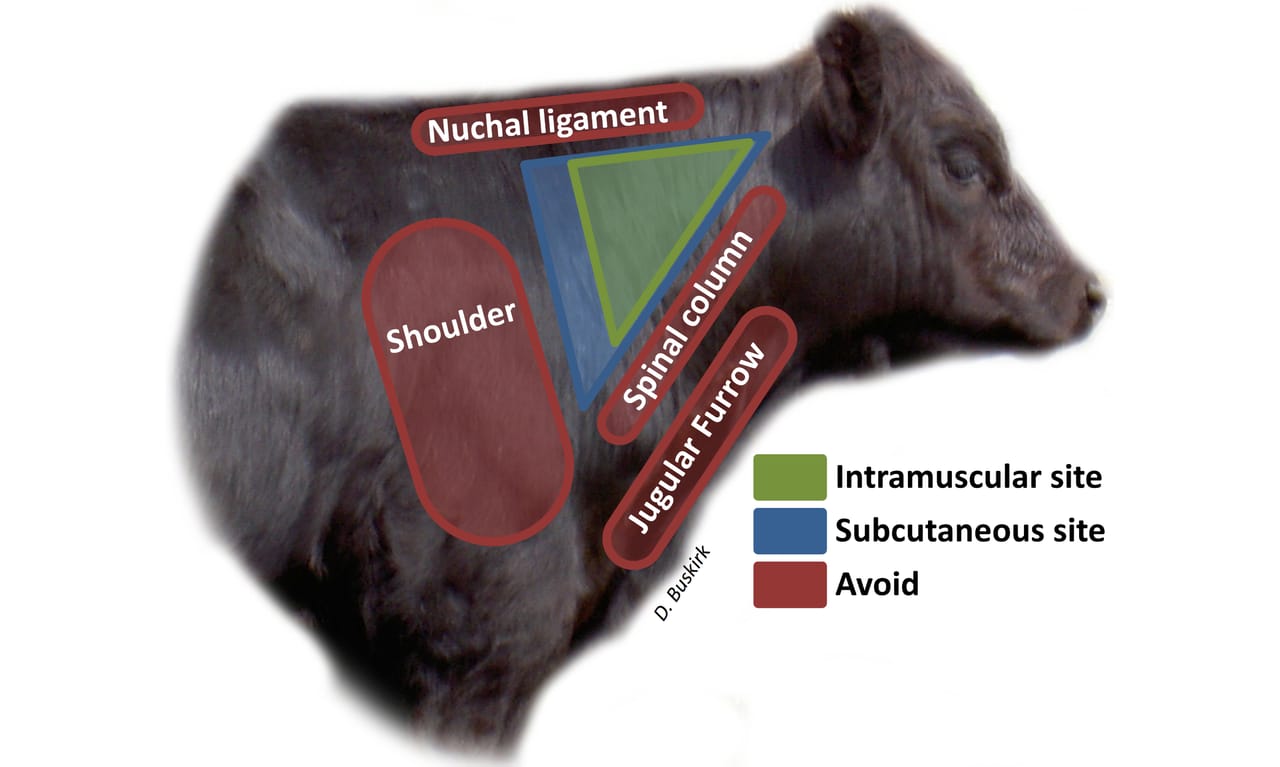
Subcutaneous injections (i.e., under the skin) should be given in either the neck or elbow pocket (small livestock).
-
All intramuscular injections should be given in the neck regardless of the animal or the type of injection; this includes estrus synchronization products.
-
Whenever the label allows for either intramuscular or subcutaneous injections, the subcutaneous route should be used.
-
Additionally, make sure to leave at least 4 inches between each injection and do not place one injection under another one
-
Never give more than 10cc of product in one injection site.
|
 |
 |
|
|
|
Weed Control
Early summer is a good time to consider treating many perennial weeds, such as thistle, tall ironweed, silverleaf nightshade and horsenettle, as well as annuals such as amaranth (pigweed), Cocklebur, ragweed, perilla mint, and Jimson weed. Reach out if you need help with identification. |
|
|
|
Record Keeping
Ensure that you are keeping accurate records on your herd or flock. That starts with identification, such as ear tagging, so that you can accurately identify animals. Meat inspectors sometimes ask for verification of the age of the animal before processing and that means detailed records. If you want your T-bones, you better document ages for all of your stock. |
|
|
|
Poultry Processing Workshop
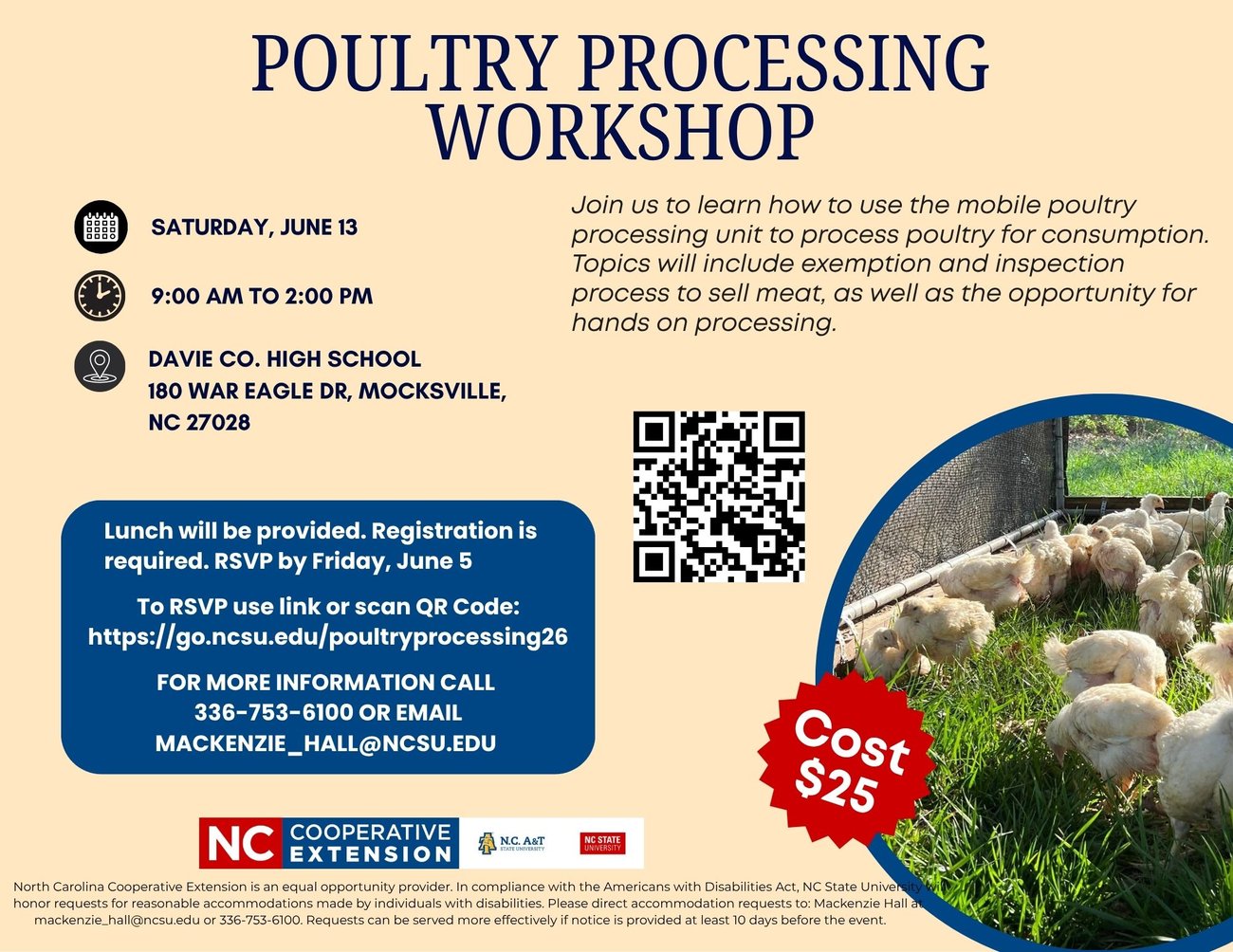
Davie County is hosting a Poultry Processing Workshop on Saturday, June 13 from 9 am - 2 pm at Davie County High School, 180 War Eagle Drive, Mocksville. Register at https://go.ncsu.edu/poultryprocessing26. |
 |
|
|
|
REMINDERS |
|
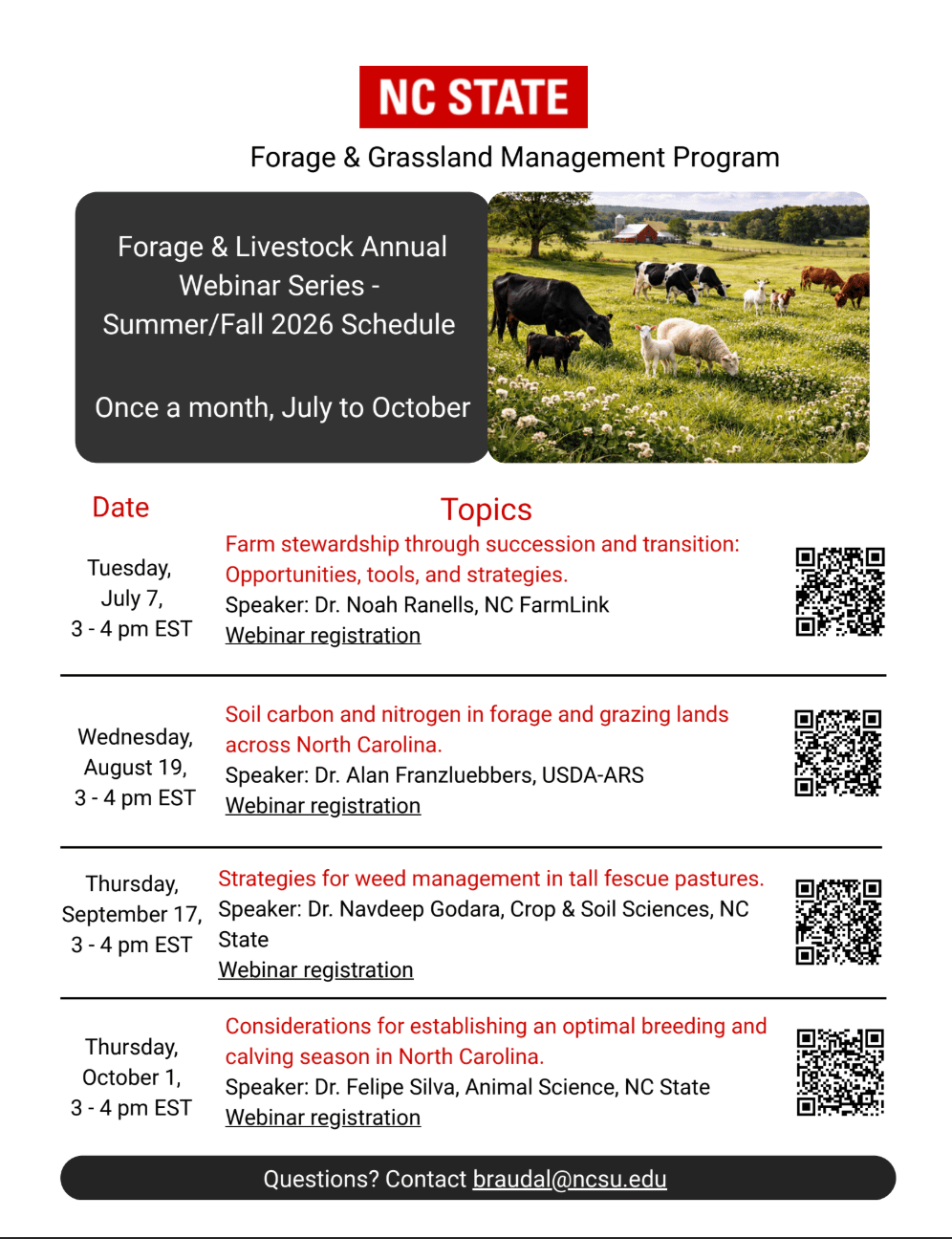
Annual Forage and Livestock Webinar Series
July 7, 3-4 pm EST
Farm stewardship through succession and transition: Opportunities, tools, and strategies.Speaker: Dr. Noah Ranells, NC FarmLink (registration link).
August 19, 3-4 pm EST
Soil carbon and nitrogen in forage and grazing lands across North Carolina.Speaker: Dr. Alan Franzluebbers: USDA-ARS (registration link).
September 17, 3-4 pm EST
Strategies for weed management in tall fescue pastures.Speaker: Dr. Navdeep Godara, Crop & Soil Sciences, NC State University (registration link)
October 1, 3-4 pm EST
Considerations for establishing an optimal breeding and calving season in North Carolina.Speaker: Dr. Felipe Silva, Animal Sciences, NC State University (registration link)
|
 |
|
|
|
Ticks and Flies
Read bout Ticks, Flies, and External Parasites of Livestock |
|
|
|
Livestock Shows
Visit a list of upcoming dates and some important information for livestock shows. |
|
|
 |
|
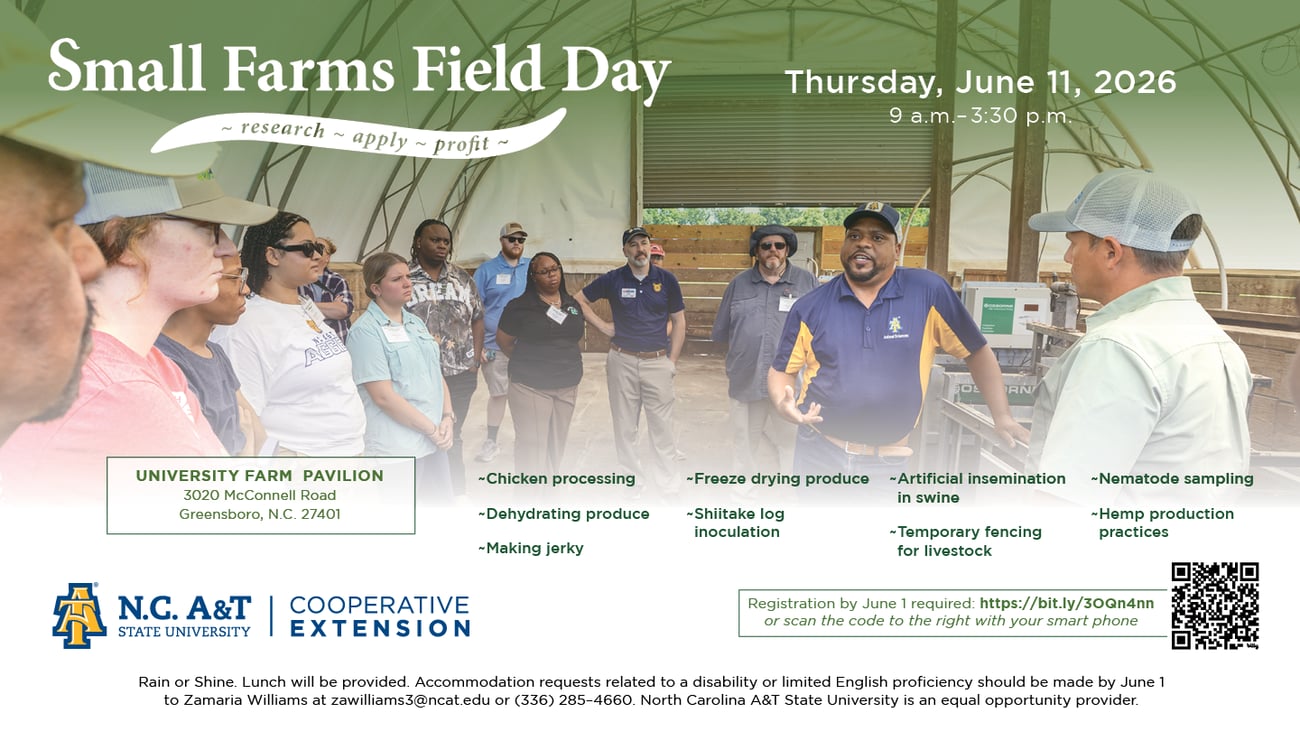
NC A&T Small Farm Field Day
You are invited to attend the NC A&T State University Small Farm Field Day on June 11, 2026, from 9:00 AM - 3:00 PM.This event will feature informative sessions on plant production, animal production, and value-added practices, along with a sponsored lunch featuring a discussion on developing farm risk management plans.Event Highlights:
- Field sessions: 9:20 AM – 12:30 PM
- Lunch & training (Southern SARE sponsored): 12:30 PM – 1:30 PM
- Small Farmer Resource Fair: 1:30 PM – 3:00 PM
Session breakdown: Plant Production TrackAnimal Production TrackValue-Added Track9:20 am – 10:20 amSampling and management strategies for NematodesArtificial Insemination for SwineFreeze Drying Fruits and Vegetables10:25 am – 11:25 amDetecting and managing nutrient issues in HempMobile Poultry Processing Dehydrating Fruits and Vegetables11:30 am – 12:30 pmInoculating Shiitake Mushrooms on LogsTemporary Fencing for Effective Grazing Dehydrating Meat Products for Jerky
We hope you will join us for this informative and engaging day supporting small farms across North Carolina. Please register if you plan to attend: |
|
|
|
NCSU Beef Field Day
The 2026 NCSU Beef Field Day will be held on Saturday, June 6 at the Mountain Research Station in Waynesvill.e Topics Include: Enhancing Beef Nutritional Efficiency, Forage Management: Drone Demonstration, Virtual Fencing, Hay Equipment Demonstration. Learn more and register at https://go.ncsu.edu/beeffieldday2026 |
|
|
|
Pastured Pork Workshop
Interested in raising "Pastured Pork"? Join N.C. Cooperative Extension and NC Choices for a workshop and tour Thursday, June 25 from 9-4 at the NC A&T State University Farm Pavilion, 3020 McConnell Road, Greensboro. Registration is required
More Information |
|
|
|
Cattle Handling System
The cattle chute and attached palpation cage are on a wheel kit and all can be rented from the county for a fee. Visit https://stokes.ces.ncsu.edu/rental-equipment/ to learn more. |
|
|
|
|
|
Forward This Email to a Friend |
|
|
|
Calendar of Livestock Events |
|
TODAY Create your listing with https://www.nchayfinder.com
June 1 Late entries for NC Sheep and Goat Roundup
June 5-7 NC Sheep and Goat Roundup, Asheboro, NC
June 5-6 Northwest Junior Livestock Show and Sale, Winston-Salem
June 6 NCSU Beef Systems Field Day
June 11 NC A&T Small Farms Field Day
June 14 FINAL day to order nominations kits for Small Livestock for the NC State Fair
June 15-July 15 Nominations open for NC State Fair Small Livestock
June 16 North Central District 4-H Poultry and Rabbit Show, King
June 25 Pastured Pork Workshop, NC A&T State University
June 25 Biosecurity in Animal Response Training, 9 am - noon, Forsyth County Fire Department
June 25 Co-Location Shelter Fundamentals, 1-5 PM, Forsyth County Fire Department
June 27 Entry deadline for Yadkin-Davie Livestock Show
June 27-28 Twisters Livestock Show, Lenoir, NC
July 3 Office Closed for 4th of July
July 7, Farm Stewardship Through Succession & Transition Zoom, 3-4 PM
Aug 7-8 NC Jr. Beef Round-up, Fletcher
Aug. 14-15 Yadkin-Davie 4-H Livestock Show, Yadkinville
Aug. 15-Sept. 15 Enter livestock in the NC State Fair
Aug. 19 Soil Carbon and Nitrogen in Forage and Grazing Lands Zoom, 3-4 PM
Aug. 29 Fall Field Day, NC Angus Association, NCSU E. Carroll Joyner Beef Education Unit, Raleigh
Sept. 1 Stokes County Fair Livestock Entries due
Sept. 7 Office Closed for Labor Day
Sept. 12 Scenario Saturday: Applying Your Large Animal Rescue Skills, 8 AM-4 PM, Northwoods Stable, Winston-Salem
Sept. 15-19 Stokes County Fair
Sept. 17 Strategies for Weed Management in Tall Fescue Pastures Zoom, 3-4 PM
Oct. 1 Considerations for Establishing an Optimal Breeding and Calving Season in NC Zoom, 3-4 PM |
|
|
|
|
|
|
 |
|
|
|
**Disclaimer: The use of brand names and/or any mention or listing of specific commercial products or services herein is solely for educational purposes and does not imply endorsement by NC State University or our partners, nor discrimination against similar brands, products or services not mentioned.
Individuals who use chemicals are responsible for ensuring that the intended use complies with current regulations and conforms to the product label.
N.C. Cooperative Extension promotes equal opportunity and prohibits discrimination and harassment based upon one’s race; color; religion (including belief and non-belief); sex, including but not limited to pregnancy, childbirth or other related medical condition, parenting and sexual harassment; sexual orientation; actual or perceived gender identity; age; national origin; disability; veteran status; genetic information; or reprisal or retaliation for prior civil rights activity.
In compliance with the Americans with Disabilities Act, NC State University will honor requests for reasonable accommodations made by individuals with disabilities. Please direct accommodation requests to: Matt Lenhardt, matt_lenhardt@ncsu.edu or 336-593-8179. Requests can be served more effectively if notice is provided at least {10} days before the event.”
Click here to unsubscribe
NOTE: This link will unsubscribe you from ALL emails from N.C. Cooperative Extension, Stokes County Center. To unsubscribe from one email list (ie, livestock) contact April Bowman, at awbowman@ncsu.edu, or 336-593-8179. |
|
|
|
|


