🌼 June is National Pollinators Month! 🐝
We're buzzing with excitement—June is officially National Pollinators Month! To celebrate, we’ll be sharing tips, facts, resources, and more on our Facebook page (Alexander County Cooperative Extension) all month long. Be sure to follow us and stay in the loop!
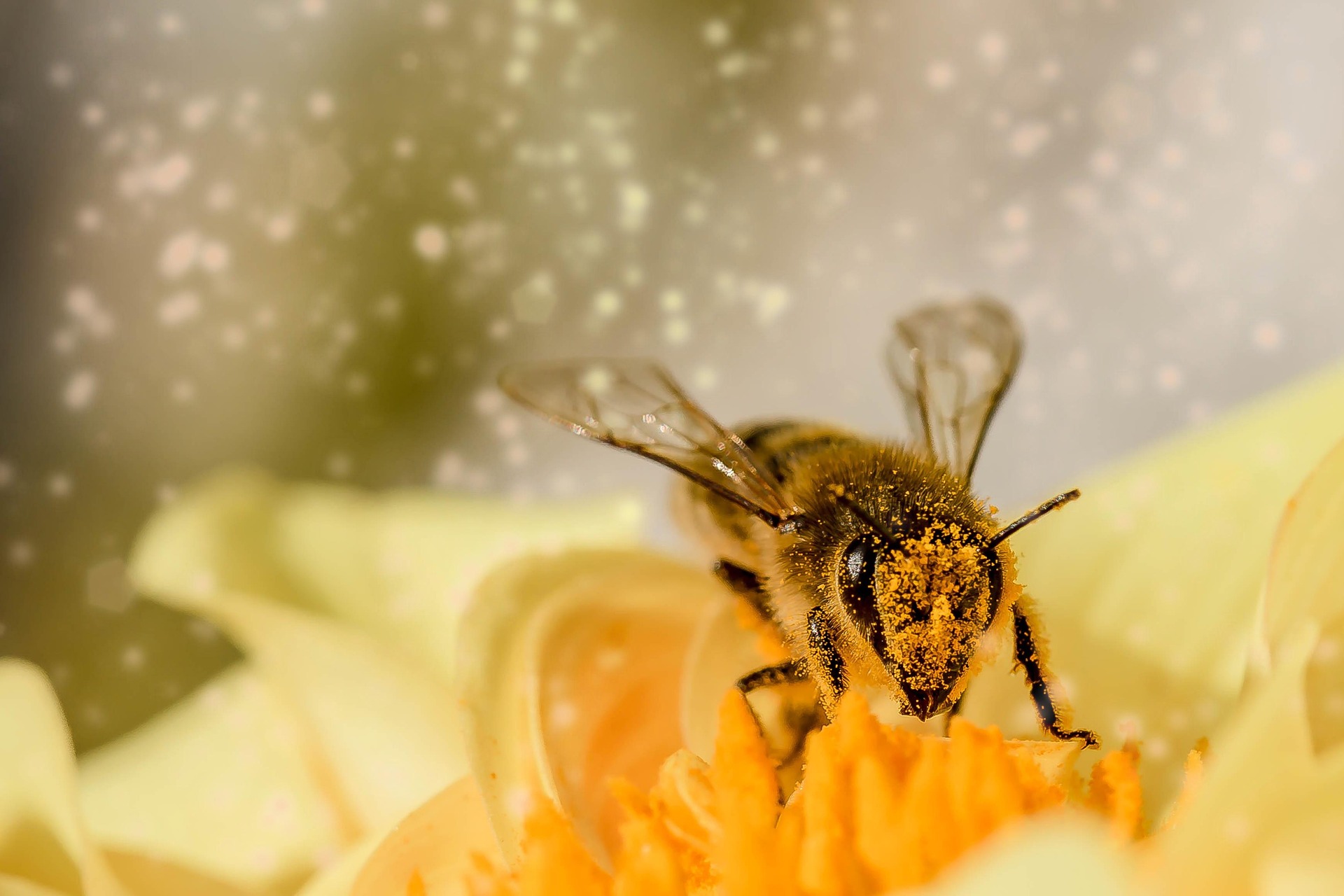
This month-long celebration expands on National Pollinator Week (June 22-28,2026), originally launched by the Pollinator Partnership. What began as a week of awareness has grown into an international campaign recognizing the vital roles of bees, butterflies, birds, bats, beetles, moths, wasps, and flies in supporting healthy ecosystems and food production.
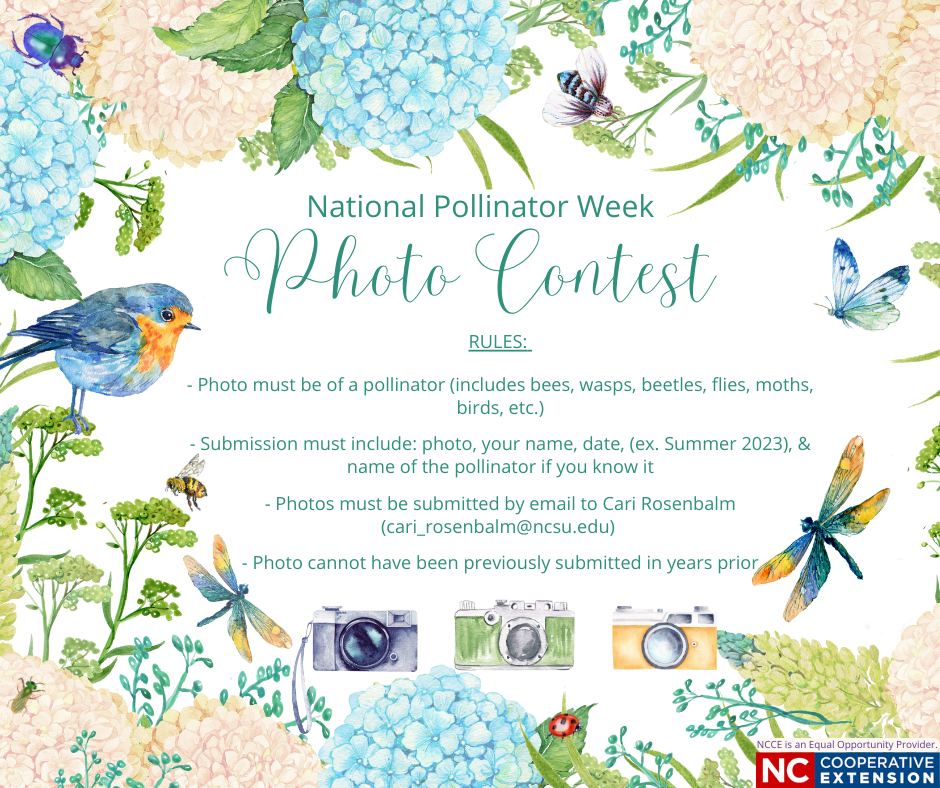
📸🌼 National Pollinator Week Photo Contest! 🐝🦋
In celebration of National Pollinator Week (June 22-28), we're excited to announce our Pollinator Photo Contest! This is your chance to spotlight the amazing pollinators in your life and show off your photography skills.
📅 Contest Timeline:
Photo submissions open now through June 20th
Voting begins Monday, June 22nd
Voting ends Saturday, June 28th at 5:00 PM
Winner announced Monday, June 29th
The photo with the most likes on the original Facebook post by the deadline will be our winner!
🏆 Prizes & Recognition:
The winner will receive a special prize.
The winning photo will be featured in the Taylorsville Times!
Multiple photo submissions are welcome!
📸 Submission Guidelines:
Photos must be of a pollinator (bees, butterflies, moths, flies, beetles, birds, bats, wasps, etc.).
Include the following with your submission:
Your name
Date the photo was taken (e.g., Summer 2022)
Name of the pollinator (if known)
Photos must be clear and in focus—blurry images will not be accepted.
Photos must be original and not submitted in past years.
📬 How to Enter:
Email your submissions to Cari Rosenbalm at 📧 cari_rosenbalm@ncsu.edu For any questions, contact Cari at 📞 828-632-4451 or via email.
Let’s show some love for the hardworking pollinators that help our gardens grow! 🌸 #PollinatorWeek #PowerInPollinators
🧺🌿 Alexander County Farmers Markets Are Back! 🍓🌽
We’re excited to welcome everyone back to the Alexander County Farmers Markets—your go-to spot for fresh, local, handmade, homegrown goodness!
Taylorsville Location 📅 Saturdays, 8:00 AM – 12:00 PM 📍 Alexander County Services Building (151 W Main Ave.)
Stop by to shop for locally grown fruits and vegetables, fresh-baked goods, handmade crafts, flowers, plants, and so much more—while supporting your local growers and makers!
Interested in becoming a vendor? We’re always looking to welcome new vendors who handmake, bake, or grow their own products. For more information or to sign up, contact Cari Rosenbalm at: 📧 cari_rosenbalm@ncsu.edu 📞 828-632-4451
Come out and enjoy the freshest flavors of the season—right from your neighbors’ gardens and kitchens! 🥬🌼
Month-by-month lists of common plant diseases, pests, and other problems you may encounter in North Carolina yards and gardens. Straight from our PDIC (Plant Disease & Insect Clinic) entomologists and pathologists!
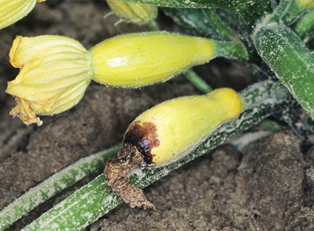
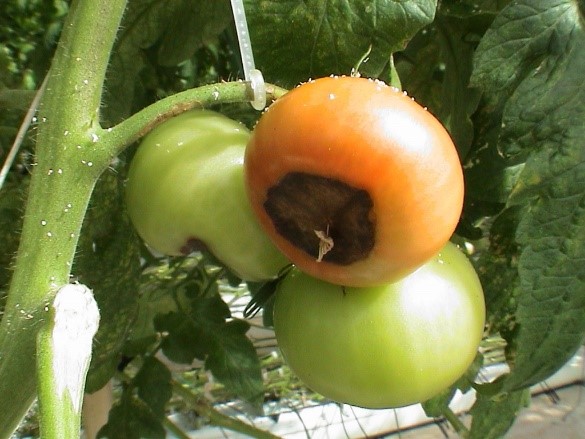
Blossom End Rot on Tomatoes and Squash Blossom-end rot is a physiological disorder caused by a lack of sufficient calcium in the blossom end of the fruit. This causes the blossom end of the tomato, squash, pepper, etc. to rot. You start to notice this disorder more when the ground or raised bed is either too wet or too dry. reduce blossom-end rot in tomato, implement the following steps :
Lime soils to pH 6.5 to 6.7 -- Home gardens not limed in the past 2 to 3 years will need 2 cups of lime for each plant. The lime should be worked into the soil 12 inches deep. To determine the exact amount of lime, take a soil sample! For accurate recommendations take a soil sample! (Call Cari Rosenbalml, Horticulture Agent, to learn more: 828-632-4451).
Fertilize properly -- Applying too much fertilizer at one time can result in blossom-end rot. Following soil test recommendations is the best way to insure proper fertilization. For home gardens not soil tested, apply 5 pints of 8-8-8 per 100 ft of row and work it thoroughly into the top 8 inches of soil.
Mulch plants -- Use straw, pine straw, decomposed sawdust, ground decomposed corn cobs, plastic, or newspapers. Mulches conserve moisture and reduce blossom-end rot. In extreme drought, plastic may increase blossom-end rot if plants are not watered.
Irrigate when necessary -- Tomato plants require about 1.5 inches of water per week during fruiting. This amount of water should be supplied by rain or irrigation. Extreme fluctuations in soil moisture result in a greater incidence of blossom-end rot.
Spray calcium -- The plants may be sprayed with a calcium solution at the rate of 4 lb of calcium nitrate or calcium chloride per 100 gal of water (or 4 level Tbs per gal of water). This spray should be applied 2 to 3 times a week, beginning at the time the second fruit clusters bloom. These materials can be mixed with the spray that is used for control of foliar diseases. Chelated calcium solutions also provide an excellent source of calcium. When using these chelates, follow label directions. Several foliar spray materials containing calcium are available and all work well for tomatoes.
Are you looking for plants to buy locally?? Here is a great list to start with of local garden centers & greenhouses:
NC State University and N.C. A&T State University work in tandem, along with federal, state and local governments, to form a strategic partnership called N.C. Cooperative Extension.