|
|
|
|
|
|
|
|
|
|
|
|
|
|
|
|
|
|
Mourning the Recent Loss of Wildland Firefighters
|
|
|
|
|
|
America's Longleaf 2025 Accomplishment Report: 1.5 Million Acres Burned & Growing the Fire Workforce
|
|
|
|
|
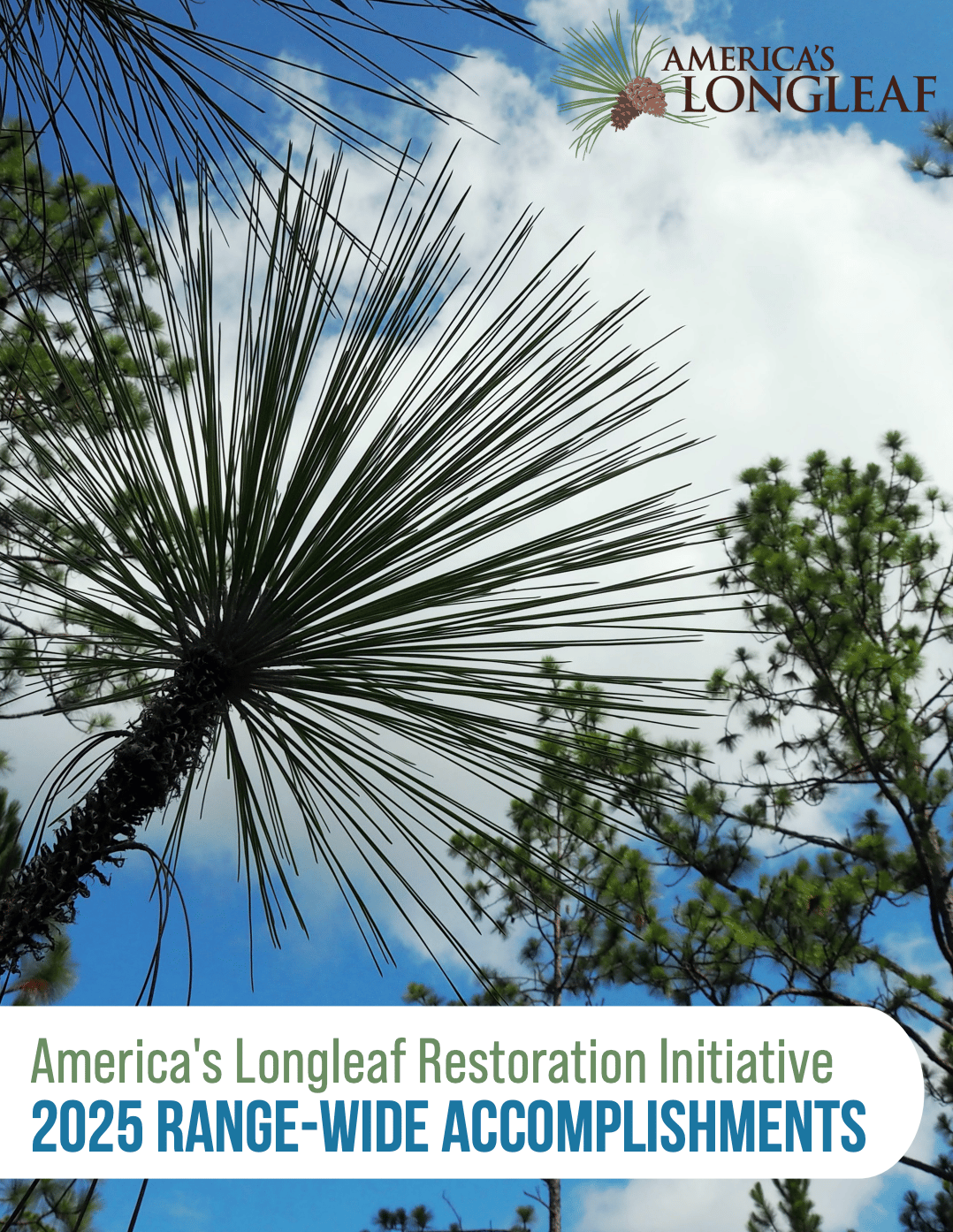
America’s Longleaf just released its 2025 Range-wide Accomplishment Report, showing over 1.9 million acres of forest restoration across the Southeast. Federal agencies, state agencies, and private landowners implemented prescribed fire on more than 1.5 million
acres of longleaf habitat in the 2025 fiscal year. In a first time shift, private landowners burned more acres in longleaf habitat than federal agencies. On top of the burns, partners planted nearly 95,000 acres of new longleaf, handled maintenance on another 221,000 acres, and put a record 80,817 acres under permanent protection through easements and land purchases.
The report also highlights new ways partners are building up the fire workforce on the ground. It spotlighted growing grassroots efforts like Prescribed and Cultural Burn Associations, where association members team up to burn safely together, alongside student burn crews at colleges like North Carolina State University. Through increased training capacity and burning opportunities, the report illustrates how training the next generation of burn bosses and keeping up steady burning across public and private lands is helping promote longleaf pine ecosystems across the
Southeast.
|
|
|
|
|
|
|
|
Tippin' Torch: Tips for the Season
|
|
|
|
|
|
|
|
|
|
|
|
Monthly Update for Prescribed Burn Associations in the Southeast
Selecting the ideal day for a prescribed burn requires careful balancing of unit characteristics, fuel types, weather conditions, and smoke management goals. In a webinar hosted on July 23, presenters from the Sandhills Prescribed Burn
Association walked through strategic approaches to navigating burn day decisions, emphasizing that thorough preparation is key to keeping operations safe and under control. The presentation highlighted critical steps for minimizing risk, including establishing fire lines well in advance, building strong community rapport, and drafting comprehensive burn plans. By keeping a close eye on weather forecasts, knowing when to call a "no-go" day, and completing proper mop-up procedures, landowners and burn managers can successfully execute their burn while keeping smoke safely away from sensitive neighboring areas. To
learn about picking the right burning day for your land, you can view the webinar recording.
For more resources on PBAs, please visit the Southeast Prescribed Fire Update website, under the "Prescribed Burn Associations" tab.
|
|
|
|
|
|
Prescribed Fire News Roundup
|
|
|
|
|
Implementing Prescribed Fire Training Events: New TREX Guidebook Released
|
|
|
|
|
| Photo Credit: Kara Karboski
|
|
|
|
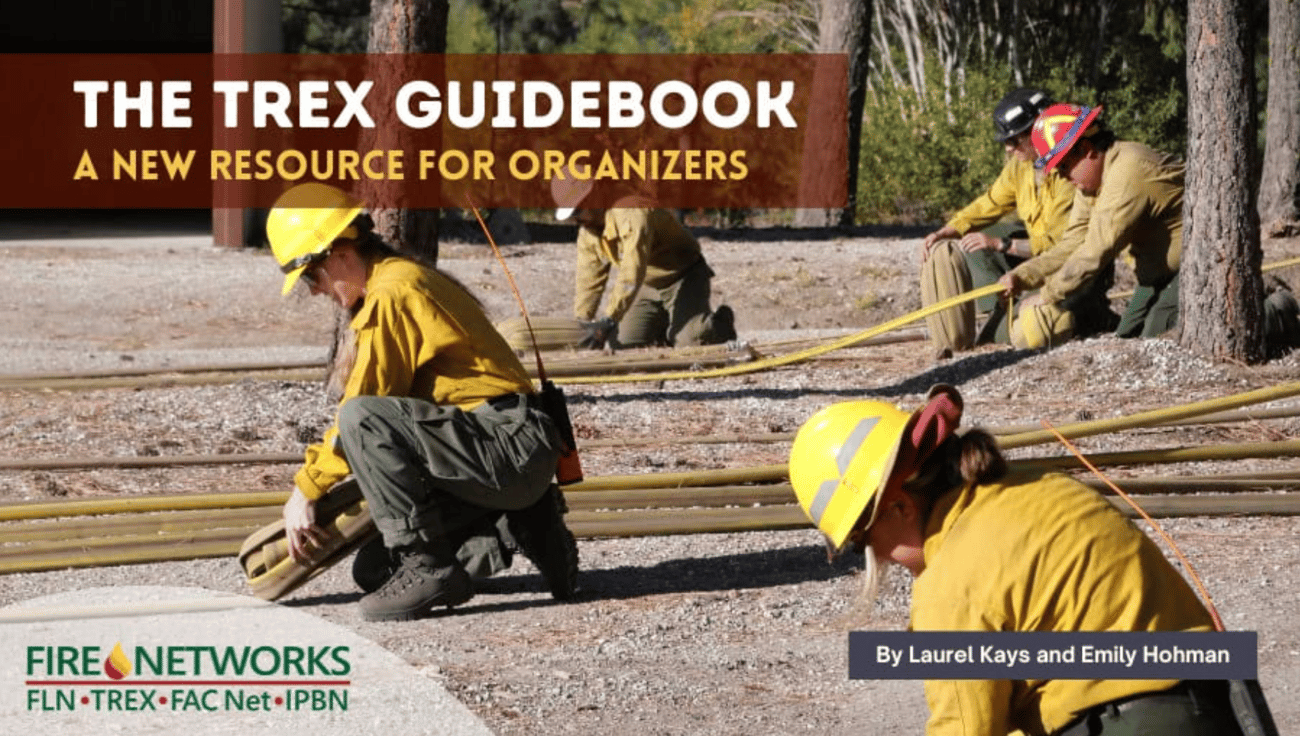
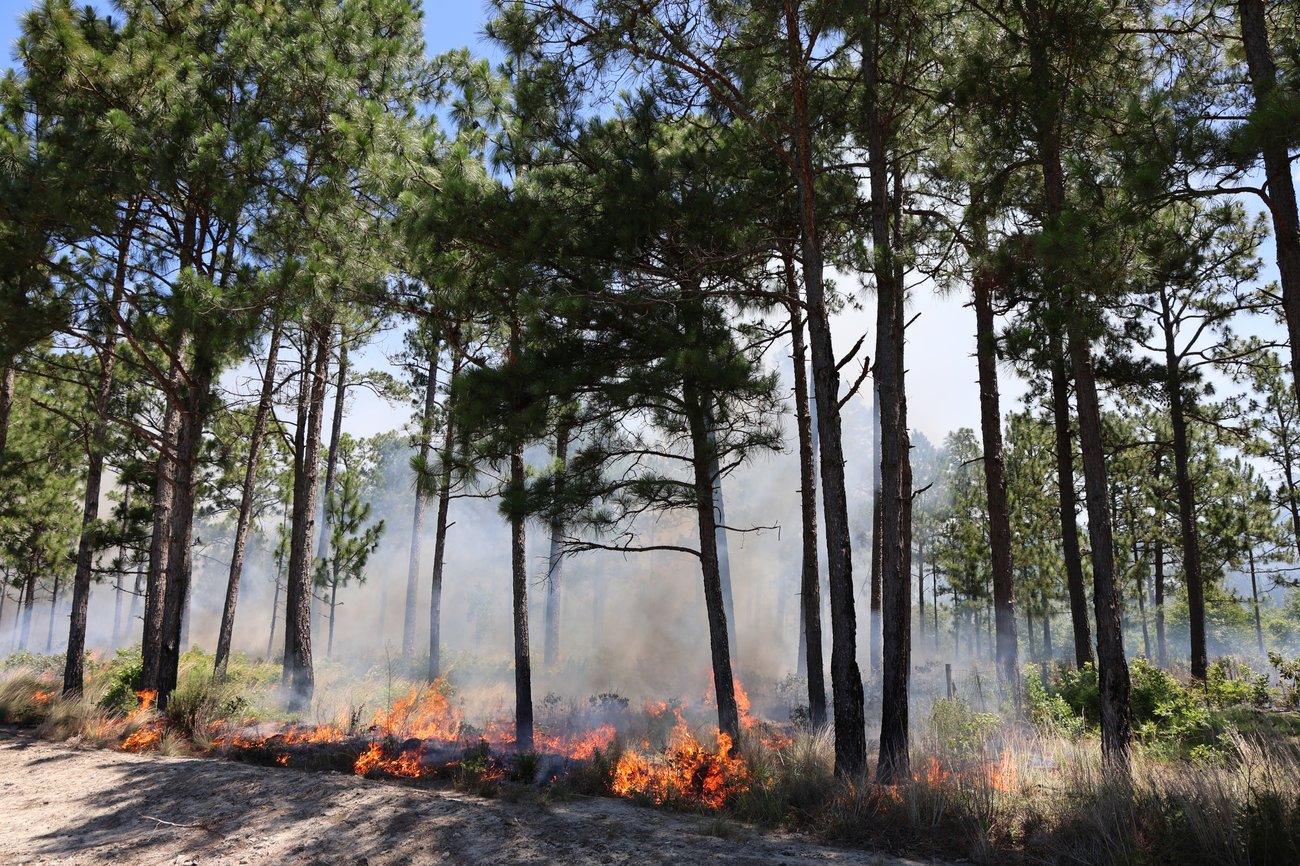
The newly released TREX Guidebook: Considerations for Planning a Prescribed Fire Training Exchange serves as a practical planning resource for fire practitioners looking to organize their own Prescribed Fire Training Exchange
events. Since starting in 2008, TREX has grown to train over 5,400 participants and treat more than 225,000 acres. Rather than providing a rigid step-by-step manual, the guidebook helps organizers navigate various event formats, key planning questions, and goal-setting strategies. The authors also encourage prospective hosts to gain first-hand experience by attending a similar TREX event before leading one of their own.
|
|
|
|
|
|
|
|
|
SERPPAS Good Map Released: A Shared Tool for Regional Collaboration
|
|
|
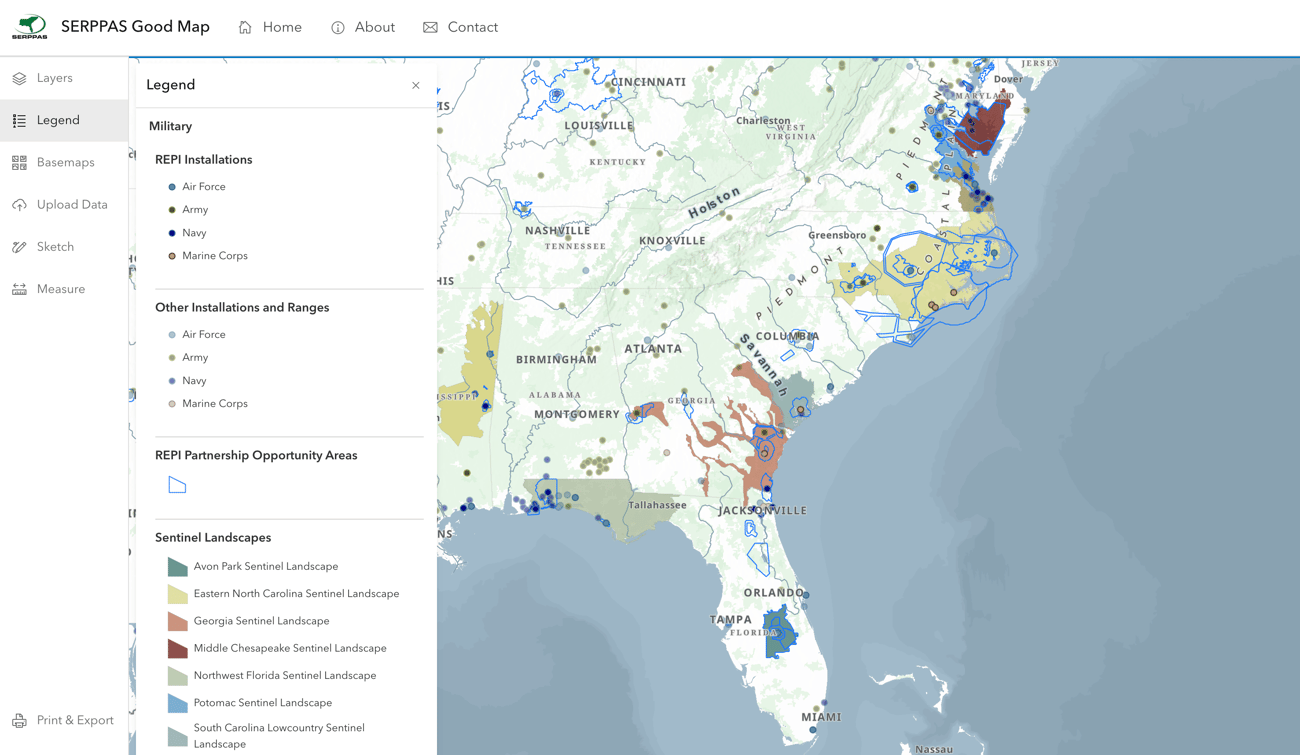
The recently released SERPPAS Good Map is an interactive tool designed to combine the best available regional military, environmental, land use, and resilience data into a single platform. By depicting shared priorities across the Southeast, the map allows partner organizations to identify overlapping interests and discover opportunities for joint action. Developed through user interviews and replacing the broader REPI Interactive Map, this tool specifically focuses on Southeastern regional goals and features interactive capabilities like custom sketching, distance measuring, layer opacity adjustments, and data uploads. The map will continue to evolve through ongoing updates to its data layers, thematic filters, and user features.
|
|
|
|
|
|
|
|
|
|
Youth-Engaged Fire Futures: Insights for Fire Workforce Development
|
|
|
|
|
| Photo Credit: Xatímniim Drake (Karuk, Shasta, Hupa)
|
|
|
|
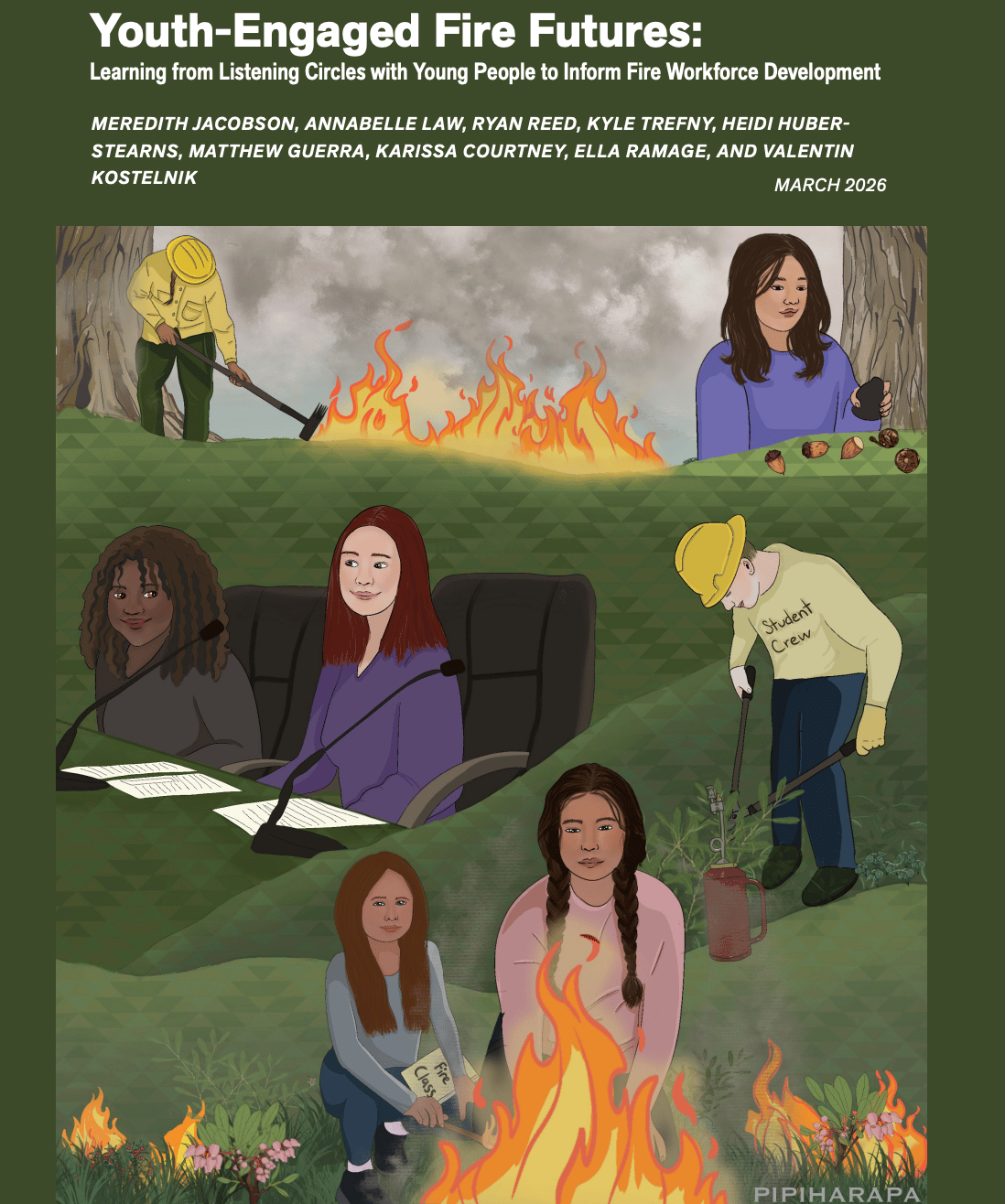
The recently released Youth-Engaged Fire Futures working paper from the Fire Resilience Futures Project shares insights from listening circles with 70 young people, ages 16 to 30, across western Oregon and
northern California to help shape the future of fire workforce development. The study reveals a high demand among diverse youth for fire careers that provide living wages, safe working environments, inclusive workplace cultures, and guidance rooted in Indigenous and place-based leadership. Participants came to the field through various routes, including Tribal cultural ties, high school programs, or a desire to take action on climate change, but also pointed to a need for clearer and more accessible entry points. Authors emphasize that building a stronger workforce requires more than just filling open jobs; it means involving young people directly in rebuilding a more equitable and supportive fire management field.
|
|
|
|
|
|
|
|
|
|
|
Other Fire Highlights and News
|
|
|
|
|
EPA’s Updated PM2.5 Standards from 2024 Upheld in Federal Court
|
|
|
|
|
In a major legal ruling, the D.C. Circuit Court of Appeals upheld a 2024 EPA rule that lowers the primary annual safety standard for fine particulate matter (PM2.5) from 12.0 to 9.0 micrograms per cubic meter. The court rejected arguments from states, industry groups, and the EPA itself seeking to vacate the rule. Instead, the court confirmed that the agency acted within its statutory authority
under the Clean Air Act to protect public health with the original rule. Because PM2.5 is a primary component of wildland smoke, this ruling solidifies stricter federal air quality baselines across the country.
|
|
|
|
|
|
|
|
|
| New Factsheet on Fire Effects on Big Game Animals Released
|
|
|
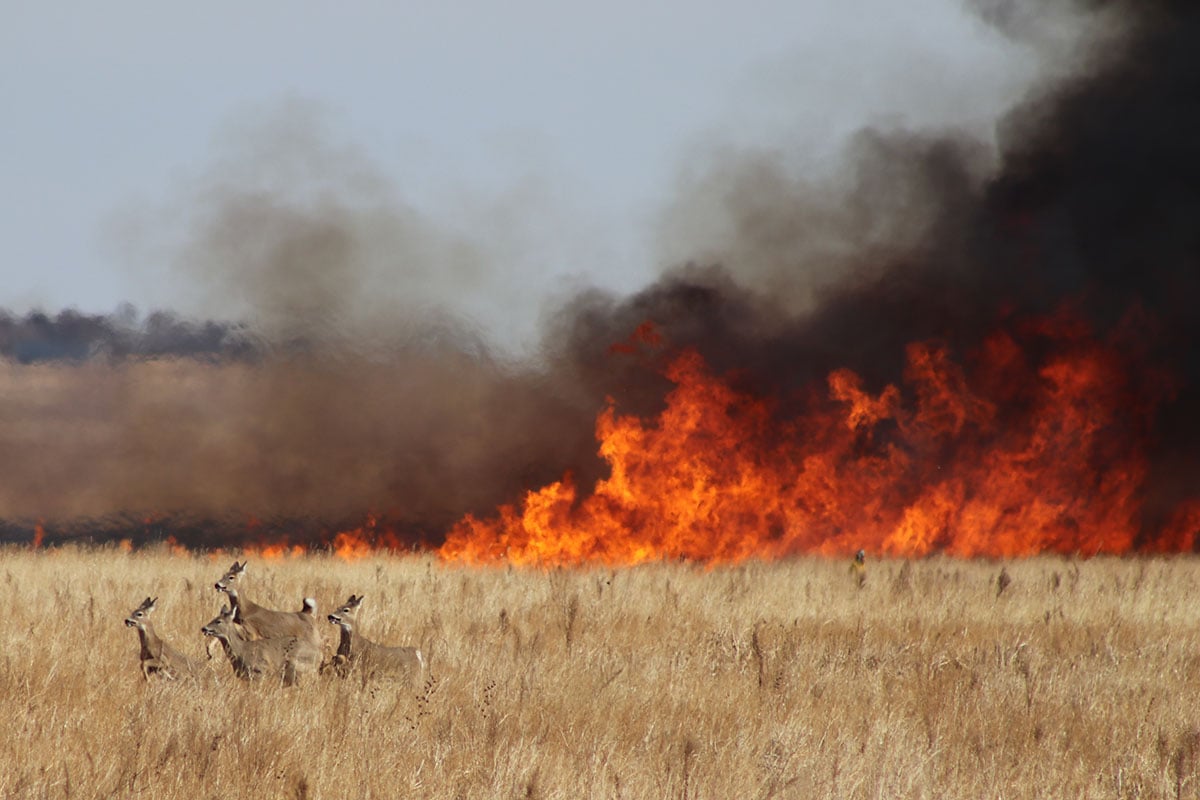
A recent Oklahoma State University Extension factsheet highlights that direct harm or mortality to big
game animals from wildland fire is rare, as most animals easily flee or seek refuge. Instead, fire's primary impact on wildlife populations occurs indirectly through habitat modification, such as stimulating high-quality forage growth, improving predator visibility, and limiting parasites. Long-term fire suppression leads to woody plant encroachment that degrades grasslands, whereas periodic burning helps maintain resilient ecosystems and supports species like bison, elk, pronghorn, and deer.
|
|
|
|
|
|
|
|
| Photo Credit: Liz Julian, USFWS
|
|
|
|
|
|
|
The Importance of Social Dynamics in Prescribed Fire
|
|
|
|
|
| Photo Credit: Jacob Court, West Texas Rangelands
|
|
|
|
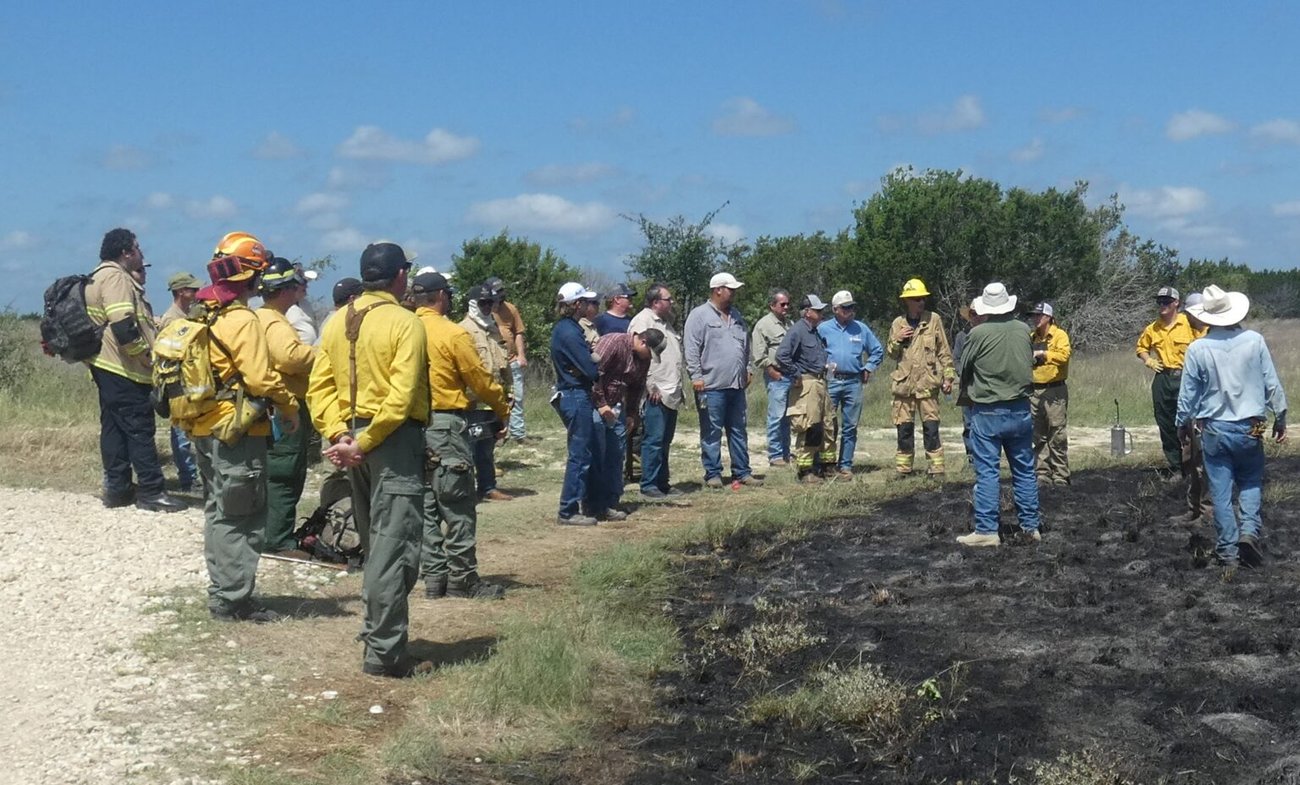
When it comes to expanding prescribed fire, the biggest hurdle isn't always the science. It can also include the social dynamics. A recent West Texas Rangelands blog highlights a study of Natural Resource Conservation Service employees in Texas and Oklahoma to see what actually drives their land management recommendations. The findings suggest that employees didn't base their advice on how much a landowner already knew about fire. Instead, positive personal interactions were the bigger influence. Staff were over three times more likely to recommend prescribed burning after a favorable conversation with a landowner.
|
|
|
|
|
|
|
|
|
|
|
|
|
|
|
|
|
|
|
- The Joint Fire Science Program is offering several funding programs that may be used to support prescribed burning and fire science in the Southeast. Requests for proposals vary in their subject area, so check out the information in the pages listed below:
Application deadline: September 17, 2026
|
|
|
- The N.C. Forest Service is accepting applications through its new Disaster Mitigation Program to assist public and private landowners in reducing heightened wildfire risks across 39 counties impacted by Hurricane Helene. Funded by a grant from the USDA Forest Service, this program aims to lower the risk of catastrophic wildfire impacts to homes, infrastructure, and natural resources by targeting hazardous fuel buildup and fallen timber at no cost to the landowner.
Funding available for:- Hazard reduction prescribed burning
- Home ignition zone treatments (defensible space creation)
- Fuel break and road restoration to reopen emergency access routes
Application deadline: Ongoing until funds are fully exhausted
|
|
|
|
|
|
|
|
|
|
|
|
|
|
|
|
|
|
|
Forester
- Kountze, TX
- Texas A&M Forest Service
- Open Until Filled
|
|
|
|
|
|
|
|
|
|
|
|
|
|
|
|
|
|
|
|
|
|
|
|
|
|
|
|
|
|
|
|
|
|
|
|
|
|
|
|
Fire Training Courses and Workshops
|
|
|
|
|
|
|
|
|
|
|
|
|
|
|
|
|
|
|
|
|
|
|
|
|
|
|
|
|
|
|
|
|
|
|
|
|
|
|
|
|
|
|
|
|
|
|
|
|
|
|
|
Virtual with In-Person Field Days
|
|
|
|
|
|
|
|
|
Consult this SAWFIT website for a useful resource on other fire trainings offered across the Southeast.
|
|
|
|
|
|
|
|
|
|
|
|
|
|
Conferences, Meetings, and Other Events
|
|
|
|
|
|
|
|
|
|
|
Share your stories, events, and information in the next issue:
|
|
|
|
|
|
|
The Driptorch Digest is distributed by NC State University as a project of the Southeast Regional Partnership for Planning and Sustainability (SERPPAS) Prescribed Fire Working Group.
NC State University promotes equal opportunity and prohibits discrimination and harassment based upon one’s race; color; religion (including belief and non-belief); sex, including but not limited to pregnancy, childbirth, or other related medical condition, parenting, and sexual harassment; sexual orientation; actual or perceived gender identity; age; national origin;
disability; veteran status; or genetic information.
This newsletter is made possible through a grant from the National Fish and Wildlife Foundation, with support from the USDA Forest Service and the Department of Defense.
|
|
|
|
|