|
|
|
|
|
|
|
|
|
|
|
|
|
|
|
|
|
|
Tall Timbers Launches Updated Prescribed Burn Planner
|
|
|
|
|
Tall Timbers has recently updated its Prescribed Burn Planner, transforming it into a "one-stop shop" for land managers and private landowners. Developed with support from the U.S. Forest Service and the Timmons Group, the tool allows users to set specific weather and wind parameters for their burn units and receive automatic notifications when ideal conditions are forecast. The latest version introduces several critical upgrades, including advanced smoke modeling to help practitioners be "good neighbors," multi-day weather forecast guidance, and the ability to map specific polygons to individual burn units.
Beyond just a
forecasting tool, the planner now supports adaptive management by allowing users to save data from completed burns for post-fire assessments. This functionality helps landowners evaluate whether their objectives were met and refine their techniques for future burns. By integrating everything from smoke screening to historical data tracking in one place, the Prescribed Burn Planner is designed to make the application of prescribed fire safer, more efficient, and more effective for fire-dependent ecosystems. A webinar hosted by the Southern Fire Exchange on April 28 will demonstrate the capabilities of this system.
|
|
|
|
|
|
Tippin' Torch: Tips for the Season
|
|
|
|
As the prescribed fire season intensifies across the South, many of us rely on UTVs and ATVs for tasks such as ignitions, monitoring, and transport. While these vehicles enhance efficiency, they also present significant risks.According to the latest report from the Consumer Product Safety Commission (CPSC), there were approximately 2,448 deaths and approximately 94,700 emergency department-treated injuries in 2018-2020 involving off-highway vehicles (OHVs), including UTVs and ATVs.
To mitigate these risks, it's essential to prioritize safety. Here are some additional resources to assist in promoting safe UTV operation:
|
|
|
|
|
|
|
|
Monthly Update for Prescribed Burn Associations in the Southeast
The Triangle Prescribed Burn Association recently completed a nine-acre
burn in Chapel Hill, NC using a drone for the first time! PBA members used the drone to provide real-time information about fire behavior and modify ignition routes. Drones can help fire practitioners with bird's eye point of view of fuel continuity, heavy fuel pockets, problem vegetation, interior burn conditions, and other fire behavior conditions. Congratulations to the Triangle PBA on a successful burn using this new technology!
For more resources on PBAs, please visit the Southeast Prescribed Fire Update website, under the "Prescribed Burn Associations" tab.
|
|
|
|
|
|
Prescribed Fire News Roundup
|
|
|
|
|
Fire Effects Information System Re-Launched With New Updates
|
|
|
|
|
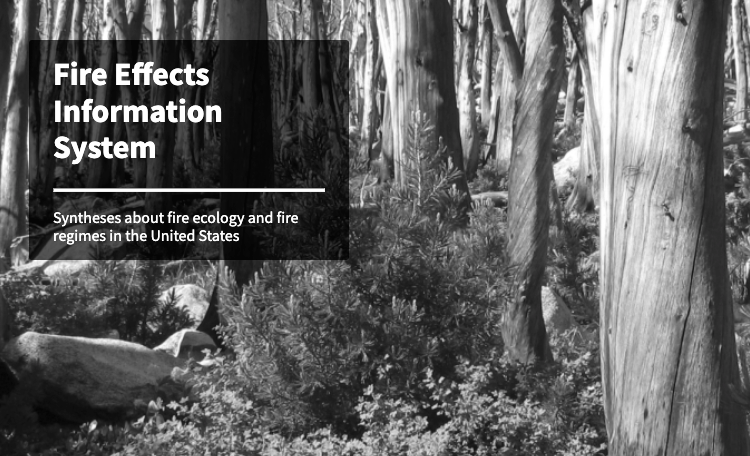
The Fire Effects Information System (FEIS) "Science You Can Use" update highlights the complete relaunch of this critical database, now featuring a modernized, user-friendly interface and expanded search capabilities. This revitalized platform provides land managers with instant access to synthesized research on the relationship between fire regimes and the habitat needs of high-priority species like the northern bobwhite. By streamlining the connection between academic science and on-the-ground management, the
new FEIS ensures that practitioners have the most current data to support fire-dependent biodiversity.
|
|
|
|
|
|
|
|
|
Wildland Fire Lessons Learned Center Releases 2025 Annual Report
|
|
|
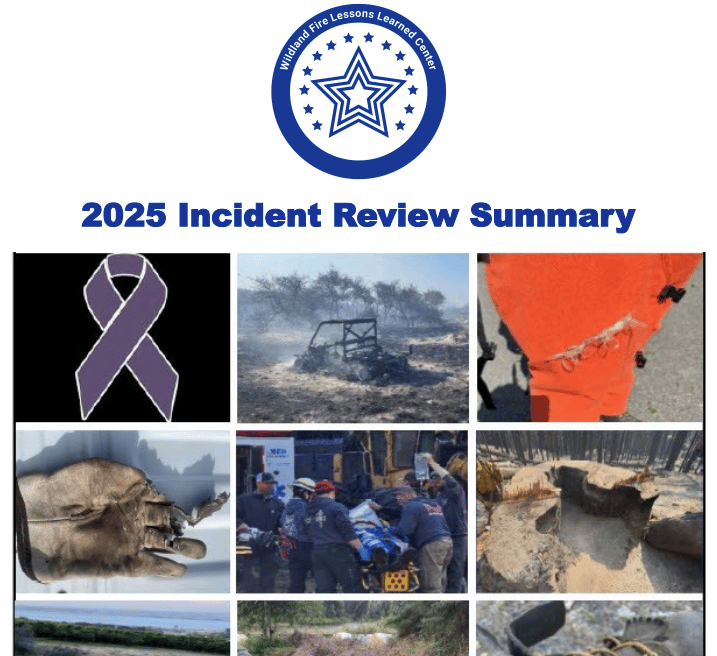
The Wildland Fire Lessons Learned Center has released its latest Annual Incident Review Summary, providing a high-level analysis of safety trends and operational challenges from the past year. By synthesizing data from multiple incidents, the
report offers critical insights into risk management and decision-making to help fire-line personnel prevent future accidents. This annual review serves as a vital learning tool for the entire fire community, ensuring that collective experiences lead to safer and more effective wildland fire operations.
|
|
|
|
|
|
|
|
|
|
Georgia's House Bill 983: Boosting Liability Protections for Prescribed Burns
|
|
|
|
|
Georgia’s House Bill 983, which aims to streamline the state’s prescribed fire program by clarifying the role of
local government notice and permitting requirements, was unanimously passed by the House and is now headed to the Georgia State Senate. This legislation recognizes the critical role of "good fire" in managing wildlife habitat and reducing wildfire risk by ensuring that no additional local regulations can restrict prescribed burning as defined by state code. By formalizing the Georgia Forestry Commission as the primary regulatory authority, the bill seeks to provide landowners with a simple and efficient process to manage their property effectively.
|
|
|
|
|
|
|
|
|
|
|
Other Fire Highlights and News
|
|
|
|
|
Texas Declares Agriculture Emergency as Panhandle Wildfires Burn Over 21,000 Acres
|
|
|
|
|
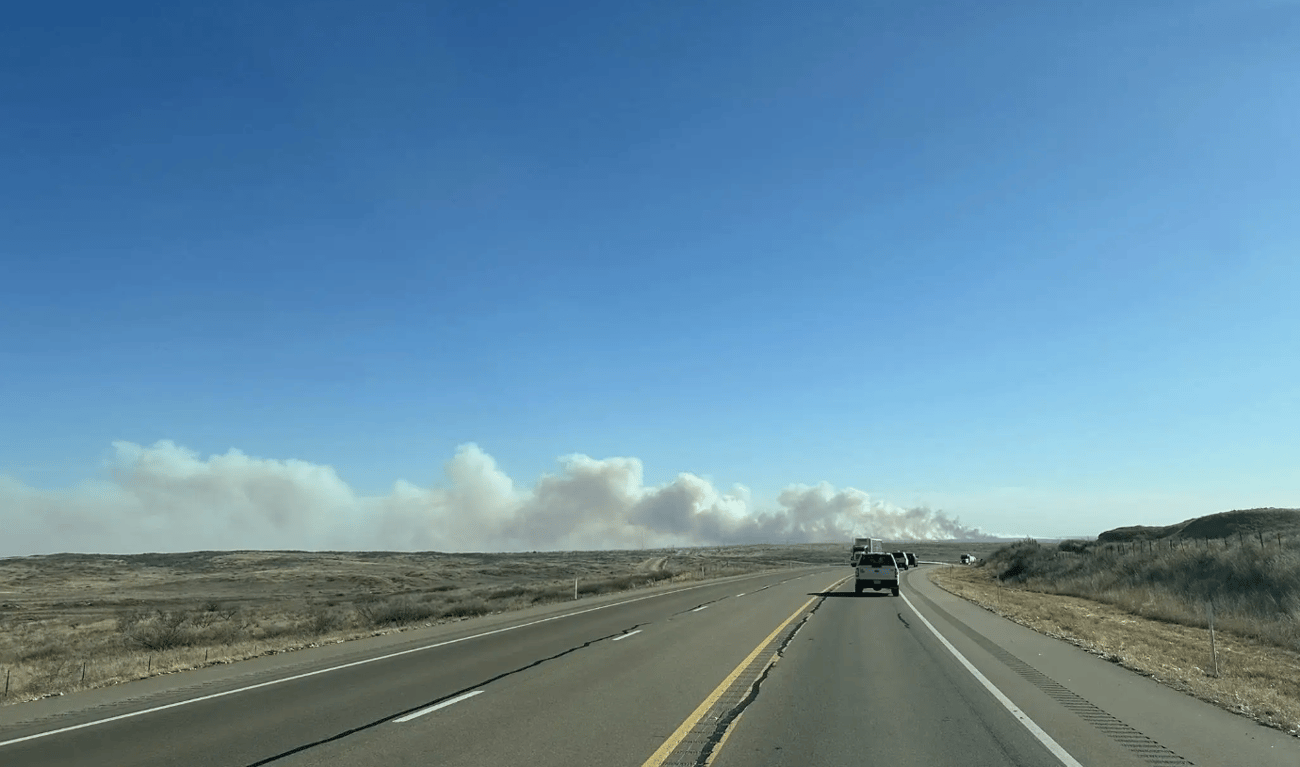
Texas Agriculture Commissioner Sid Miller has declared an "Agriculture Emergency" in response to a new wave of wildfires in the Panhandle that have burned over 21,350 acres and inflicted severe losses on local farmers and ranchers. With critical fire conditions persisting, the state has activated extensive emergency resources, including the Texas Intrastate Fire Mutual Aid System and National Guard helicopters, to support recovery efforts and protect agricultural livelihoods. Producers affected by these blazes are encouraged to utilize state relief funds and specialized hotlines for hay, feed, and stress management assistance.
|
|
|
|
|
|
|
|
|
New Study Finds Rescinding Roadless Rule May Increase Wildfire Risk
|
|
|
A new
study published in the journal Fire Ecology suggests that rescinding the federal "Roadless Rule" could lead to more frequent wildfires, contradicting claims that more roads facilitate better fire prevention. Research shows that lands within 164 feet of roads have the highest density of wildfire ignitions, while roadless wilderness areas maintain the lowest risk. Experts warn that opening these intact forests to road construction and logging
increases human activity, which is a primary driver of new fire starts.
|
|
|
|
|
|
|
|
|
|
| Fire Networks 2025 Impact Report Released
|
|
|
|
|
The 2025 Fire Networks Impact Report highlights a year of significant progress in restoring fire-adapted landscapes and strengthening community wildfire resilience through collaboration between agencies, Tribal leaders, and local residents. Key achievements featured in the report include the success of community-led prescribed fire training exchange (TREX) events and the strategic application of cultural burns to protect lands during active wildfire seasons.
|
|
|
|
|
|
|
|
|
|
|
|
|
|
|
|
|
|
|
Healthy American Forests Initiative
- NFWF, through an agreement with the U.S. Forest Service, is accepting proposals for the Healthy American Forests Initiative to support watershed restoration and vegetation management on National Forest System lands.
Funding available for:
- On-the-ground restoration (habitat restoration, stream/wetland restoration)
- Vegetation management and wildfire risk reduction
- Technical assistance, outreach, and capacity building
- Planning and design for sustainable forest management
- Species recovery and habitat connectivity
- Infrastructure resilience and workforce development
- Award amounts: $250,000 – $2,000,000
- Application deadline: March 17, 2026
|
|
|
Fire Science Innovations through Research and Education (FIRE)
- The U.S. National Science Foundation is accepting proposals through its FIRE program to support convergent research, education, and networking activities to improve understanding, prediction, and resilience to wildland fire and its
interactions with communities, infrastructure, and the natural environment.
Funding available for:
- Focus area 1: Next Generation Coupled Fire Models (FIRE-MODEL)
- Focus area 2: Enhancing Capacity for Fire Resilience in the Wildland-Urban Interface (WUI)
- Focus area 3: Fire Science Innovations through Research and Education (FIRE) Networks (FIRE-NET)
- Application deadline: April 1, 2026
|
|
|
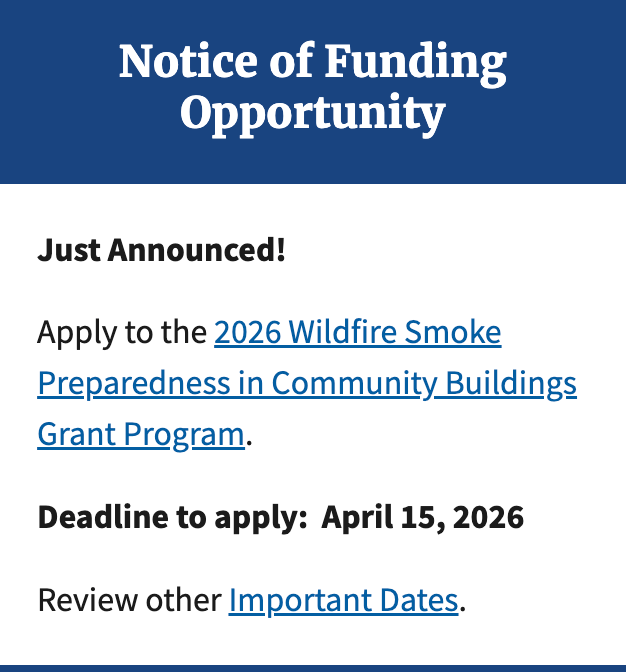
Wildfire Smoke Preparedness in Community Buildings Grant Program
- The EPA is accepting applications for projects that enhance public health by reducing indoor exposure to wildfire smoke and other pollutants. The program focuses on improving indoor air quality in community buildings such as schools, libraries, and community centers, with a priority on serving disadvantaged and smoke-burdened communities.
Funding available for:
- Building upgrades: HVAC repairs, air filtration system enhancements, and weatherization to prevent smoke intrusion.
- Equipment & monitoring: Purchase of portable air cleaners and the installation of indoor/outdoor air quality sensors.
- Cleaner air shelters: Preparation of dedicated public spaces to serve as "cleaner air centers" during smoke events.
- Planning & training: Development of smoke readiness plans and training for building managers on indoor air quality (IAQ) management.
- Public outreach: Community
education regarding the health risks of wildfire smoke and how to use the upgraded facilities.
- Technical assistance: Support for tribes and low-capacity communities to design and implement air quality protection strategies.
Award amounts: $350,000 – $2,500,000
Application deadline: April 15, 2026
|
|
|
Lower Mississippi Alluvial Valley Restoration Fund- NFWF, in partnership with several federal agencies and private corporations, is accepting proposals for the Lower Mississippi Alluvial Valley Restoration Fund to restore and enhance bottomland hardwood forests and wetland habitats.
Funding available for:
- Forest restoration: Reforestation, afforestation, and silvicultural treatments on private and public lands.
- Wetland hydrology: Restoration of natural floodplains and installation of water-control structures.
- Working lands conservation: Technical assistance for landowners to implement soil
health and water quality practices.
- Species-specific recovery: Habitat enhancement for the Louisiana black bear, waterfowl, and forest-dependent songbirds.
- Aquatic connectivity: Improvement of fish passage and stream health within the alluvial valley.
- Community resilience: Nature-based solutions that mitigate flooding and support local conservation jobs.
- Award amounts: $150,000 – $1,000,000
- Application deadline: April 23, 2026
|
|
|
|
|
|
|
|
|
|
|
|
|
|
|
|
|
|
|
|
|
|
|
|
|
|
|
|
|
|
|
|
|
|
|
|
|
|
|
|
|
|
|
|
|
|
- Big Cypress, FL
- Seminole Tribe of Florida
- Open Until
Filled
|
|
|
|
|
|
|
|
|
|
|
|
|
|
|
|
|
|
|
Fire Training Courses and Workshops
|
|
|
|
|
|
|
|
|
|
|
|
|
|
|
|
|
|
|
|
|
Tallahasee, FL & Tulsa, OK
|
|
|
|
|
|
|
|
|
|
|
|
|
|
|
|
|
|
|
|
|
|
|
|
|
|
|
|
|
|
|
|
|
|
|
|
|
|
|
|
|
|
|
|
|
|
Tallahassee, FL & Rapid City, SD
|
|
|
|
|
|
|
|
|
|
Niobrara Valley Preserve, NE
|
|
|
|
|
|
|
|
|
|
|
|
|
|
|
|
|
|
|
|
Virtual with In-Person Field Days
|
|
|
|
|
|
|
|
|
|
|
|
|
|
|
|
|
|
|
|
|
|
|
|
|
|
|
|
|
|
|
|
Tallahassee, FL & Tulsa, OK
|
|
|
|
|
|
|
|
|
|
|
|
|
|
|
|
|
|
|
|
|
|
|
|
|
|
|
|
|
|
|
|
|
|
|
|
|
|
Virtual with In-Person Field Days
|
|
|
|
|
|
|
|
|
|
|
|
|
|
|
|
|
Consult this SAWFIT website for a useful resource on other fire trainings offered across the Southeast.
|
|
|
|
|
|
|
|
|
|
|
|
|
|
Conferences, Meetings, and Other Events
|
|
|
|
|
|
|
|
|
|
|
Share your stories, events, and information in the next issue:
|
|
|
|
|
|
|
The Driptorch Digest is distributed by NC State University as a project of the Southeast Regional Partnership for Planning and Sustainability (SERPPAS) Prescribed Fire Working Group.
NC State University promotes equal opportunity and prohibits discrimination and harassment based upon one’s race; color; religion (including belief and non-belief); sex, including but not limited to pregnancy, childbirth, or other related medical condition, parenting, and sexual harassment; sexual orientation; actual or perceived gender identity; age; national origin;
disability; veteran status; or genetic information.
This newsletter is made possible through a grant from the National Fish and Wildlife Foundation, with support from the USDA Forest Service and the Department of Defense.
|
|
|
|
|