|
|
|
|
|
|
Alexander County Center Newsletter
|
|
|
|
|
|
|
|
|
Fall Armyworms
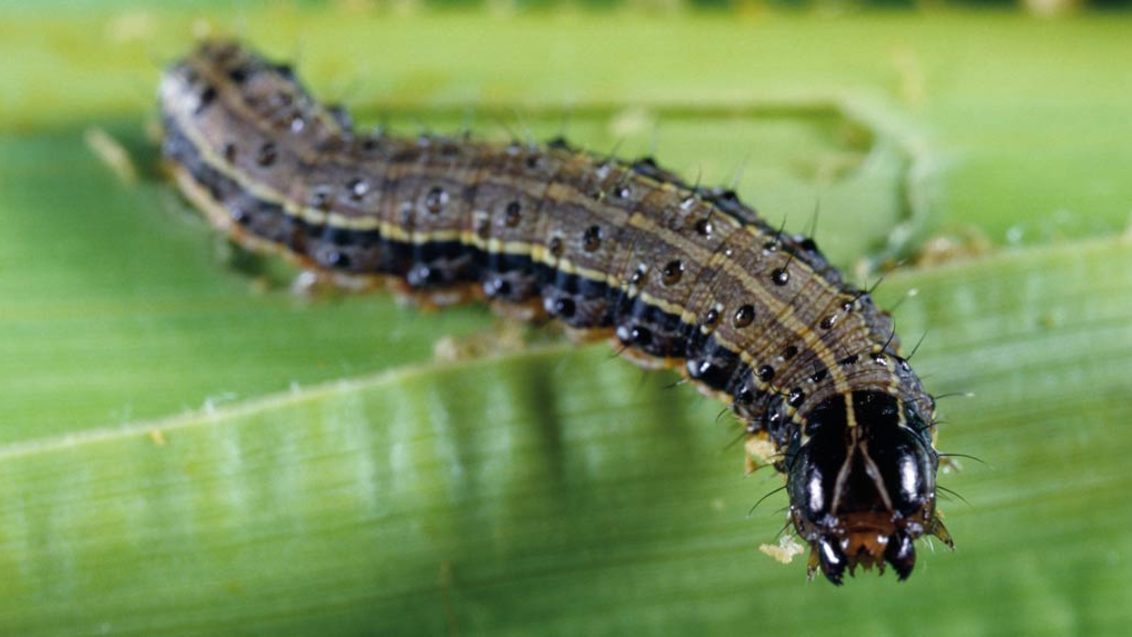
Fall armyworms have already been reported in upstate South Carolina in counties that border NC. Their presence would just be the icing on the cake for producers already struggling to have enough forage going into winter this year! These insects can destroy a pasture in a very short period of time, sometimes with the damage seeming to occur overnight. They feed on the leaf blades of grasses, leaving behind only tough stems. This defoliation can stress and weaken pastures and lawns, leading to brown patches in the field that can rapidly increase in size. This damage reduces hay yields and forage available for grazing. They often travel in waves, searching for new forage.
Scouting for the fall armyworm is important, as they can very quickly become a problem. It is recommended to scout early in the morning or late in the evening, as they will hide or go to the ground during the heat of the day. Be on the lookout for small striped larvae that range in color from light green to almost black. They have a distinctive “face” marking that looks like a light colored inverted “Y”. These larvae feed for about 14 days before pupating into the adult moth. The last four days are when they eat the most and can do the most damage. In order to scout for the armyworm, look closely at the ground and ruffle the grass to dislodge any armyworms. Count the number of larvae within a square foot area. Do this at multiple sites throughout the field. If you average more than 3 caterpillars that are ¼ inch or longer per square foot then you have reached the threshold for treatment.
If you decide to treat your pastures or hay fields, approved products can be found here NC STATE. Remember to read the label and follow all restrictions. Please contact the Alexander County Cooperative Extension Center at 828-632-4451 to report the presence of fall armyworms in Alexander County.
|
|
|
|
|
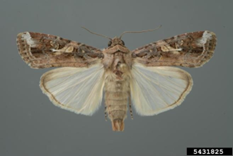
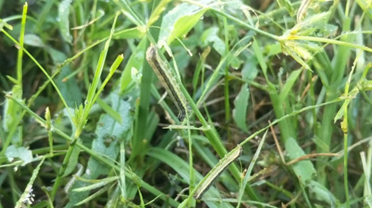
photo on the left: fall armyworm adult male moth, photo on right: younger fall armyworms (more green in color)
|
|
|
|
|
The Mediterranean Eating Pattern: Nourishing Body and Mind
August can sometimes feel like a double-edged sword. With back-to-school madness, late-summer routines, and the lingering regret of forgotten New Year’s resolutions or abandoned diets, it is easy to feel completely over it. But don't throw in the towel just yet. You don't need another restrictive, soul-crushing diet to get back on track—you just need real, vibrant food.
Enter the Mediterranean eating pattern: a flexible, delicious lifestyle approach to food that relies on abundance, not restriction.
What Is the Mediterranean Eating Pattern?
At its core, the Mediterranean eating pattern emphasizes abundance rather than restriction. It prioritizes plant-based foods while leaving room for variety. Built on the foundation of simple foods such as fish, nuts, plant oils, fruits, and vegetables, the “Med” way makes it easy to apply your diet to a host of global cuisines. But eating the “Med” way doesn’t focus solely on dietary change; it also encourages lifestyle activities such as walking, adequate rest, building relationships, and mindfulness.
Why It Matters: Long-Term Health Benefits
Decades of epidemiological research consistently rank the Mediterranean eating pattern among the healthiest in the world and have listed it as one of the top Best Diets in U.S. News and World Report. Not to mention, it has been one of the few diets mentioned in the Dietary Guidelines for Americans. Top reason for this:
- Cardiovascular Protection: Rich in monounsaturated fats from olive oil and omega-3 fatty acids from fish, this pattern helps reduce LDL cholesterol, lower blood pressure, and decrease systemic inflammation.
- Metabolic Health: High dietary fiber from legumes and whole grains helps stabilize blood sugar, lowering the risk of type 2 diabetes.
- Cognitive Resilience: Anti-inflammatory antioxidants found in berries, leafy greens, and olive oil are linked to slower cognitive decline and reduced dementia risk as you age.
Simple Ways to Incorporate It Today
August is arguably the easiest time of year to adopt Mediterranean principles because local farmers' markets and produce aisles are at peak summer abundance.
High-summer staples—like sun-ripened tomatoes, sweet bell peppers, crisp cucumbers, dark leafy basil, zucchini, and purple eggplants—are packed with flavor and antioxidants. Eating seasonally in August means higher nutrient density, better taste, and lower costs. You don't need to overhaul your entire pantry overnight. Small, deliberate shifts make a lasting difference:
1. Swap Your Cooking Fat: Replace butter or vegetable oil with extra virgin olive oil for roasting, sautéing, and dressing.
2. Build Meatless Meals: Replace meat twice a week with legumes—try chickpea curry, lentil soup, or black bean grain bowls.
3. Snack on Whole Foods: Choose a handful of raw almonds or fresh fruit over packaged snacks.
4. Fill Half Your Plate with Plants: Make vegetables the main event of lunch and dinner.
Seasonal Late-Summer Recipe: Chickpea & Tomato-Cucumber Salad
Late summer brings an abundance of ripe, sweet tomatoes and crisp cucumbers—perfect for a quick, zero-cook Mediterranean dish. Start today by trying out this simple and easy dish to make in less than 20 minutes.
Ingredients
- 1 can (15 oz) chickpeas, rinsed and drained
- 2 cups fresh ripe tomatoes, chopped
- 1 large cucumber, diced
- 1/2 red onion, finely sliced
- 1/2 cup crumbled feta cheese
- 1/4 cup fresh basil or parsley, chopped
- 3 tbsp extra virgin olive oil
- 1 tbsp fresh lemon juice
- Salt, pepper, and dried oregano to taste
Instructions
- Combine: In a large bowl, toss the chickpeas, tomatoes, cucumber, and red onion together.
- Dress: Whisk the extra virgin olive oil, lemon juice, salt, pepper, and oregano in a small dish. Pour over the salad.
- Finish: Gently fold in the feta cheese and fresh herbs right before serving. Enjoy at room temperature or chilled!
|
|
|
|
|
|
|
|
|
Green Thumb Gazette Newsletter
The August edition is now available. For more information on August and September garden tasks and what to be on the lookout for click the link below. This months newsletter also includes upcoming events along with several horticulture educational topics. If you find this newsletter helpful and you would like to receive it each month contact Cari Rosenbalm at cari_rosenbalm@ncsu.edu to be added to the mailing list.
|
|
|
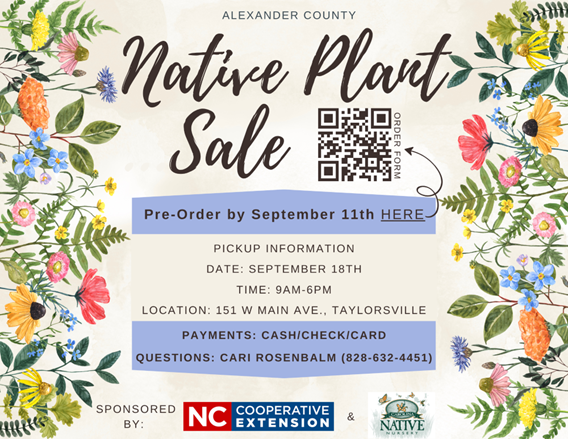
Taking Orders Now for the 2026 Fall Native Plant Sale....
Pre-Order by September 11th
Pickup on September 18th from 9AM-6PM at the Alexander County Service Center
Payments: Cash/Check/Card
Questions call: 828-632-4451 or email Cari.
Order Information
|
|
|
|
|
|
|
|
Alexander 4-H Update
Alexander 4-H wrapped up another sucessful and fun summer program. Now is a great time to look over the 4-H clubs that is offered in Alexander County. A new year will be starting with most of the clubs regrouping in September. Please go to our facebook page to catch updates and see what 4-H Clubs are available and when they meet.
If you have any questions feel free to reach out to DJ Salyer by email or call 828-632-3125.
|
|
|
|
Livestock Weighted Average Report for 7/26/2026 - 8/1/2026
NC Department of Ag, Market News Division
LIVESTOCK SUMMARY
Current Week Last Reported Last Year
7/20/26
Total Receipts: 3,142 2,910 2,657
Feeder Cattle: 2,071 (65.9%) 1,827 (62.8%) 1,590 (59.8%)
Slaughter Cattle: 513 (16.3%) 535 (18.4%) 597 (22.5%)
Replacement Cattle: 110 (3.5%) 159 (5.5%) 74 (2.8%)
Slaughter 111 (3.5%) 141 (4.8%) 178 (6.7%)
Sheep/Lambs:
Slaughter Goats: 337 (10.7%) 248 (8.5%) 218 (8.2%)
Compared to last week, feeder cattle were 5.00-10.00 lower with some instances of sharply lower on mostly average quality offerings seen throughout the week. Slaughter cattle were unevenly steady with moderate demand. Supply included: 66% Feeder Cattle (22% Steers, 0% Dairy Steers, 43% Heifers, 35% Bulls, 0% Dairy Heifers, 0% Beef/Dairy Heifers); 16% Slaughter Cattle (87% Cows, 13% Bulls); 4% Replacement Cattle (1% Stock Cows, 57% Bred Cows, 42% Cow-Calf Pairs); 4% Slaughter Sheep/Lambs (66% Hair Breeds, 11% Ewes, 12% Hair Ewes, 9% Bucks, 2% Hair Bucks); 11% Slaughter Goats (85% Kids, 7% Nannies/Does, 7% Bucks/Billies). Feeder cattle supply over 600 lbs was 26%.
QUESTION OF THE WEEK: DR. ANDREW P. GRIFFITH, University of Tennessee
The question that has been repeated several times this week is what impact will the opening of the Mexico border to cattle coming into the United States have on the domestic cattle market. The simple announcement of the Mexican border reopening has already had its impact as the news was received negatively by futures market traders. Thus, whether animals cross the border or not, some of the impact has already been experienced. Going a little further with the discussion, it is unlikely large quantities of cattle will begin crossing the border in the near term. There are fairly rigorous health protocols that must be met for cattle to enter the United States. There will certainly be cattle that do not meet those requirements as some producers in Mexico probably did not maintain all the requirements. On the other hand, operations on the Southern border who depend on Mexican cattle will benefit greatly from cattle being imported. In short, there should not be some drastic change in the domestic market due to the border reopening.
|
|
|
|
|
2026 Taylorsville Apple Festival Contests
Two contests will be held this year at the Apple Festival. The dessert contest is for adults and the candied apple art contest is for youth. Below is more information on each one:
Dessert Contest: Entries will be accepted until 12 noon before judging begins, at the information booth located outside Rooted on Main Boutique.
Rules:
- 18 years and older
- must contain at least one cup of apple either fresh, canned, dried, sauce or apple butter
- can be any type of dessert including but not limited to cakes, cookies, pies, puddings, or cobblers. No refrigerated desserts will be accepted including those with cream cheese, heavy cream and/or egg yolk.
- required to submit with a written recipe including name of dessert, all ingredients used, and preparation methods
- recipes will be used to the descretion of the Extension office and may be shared with the general public.
- winning dessert will be selected for a 1st, 2nd and 3rd place based on taste, appearance, orginality, and ease of preparation.
Candied Apple Art Contest:
Rules:
- 18 years and younger
- each entry must consist of one candy apple, wrapped in clear plastic cup
- apples will be judged on appearance and creativity
- entries will be accepted until 12 noon at the information booth located outside Rooted on Main Boutique
Age Categories:
- 5-8 years old $20
- 9-14 years old $20
- 15-18 years old $20
|
|
|
|
|
|
|
|
|
|
|
NC State University and N.C. A&T State University work in tandem, along with federal, state and local governments, to form a strategic partnership called N.C. Cooperative Extension.
|
|
|
|
|
|
|